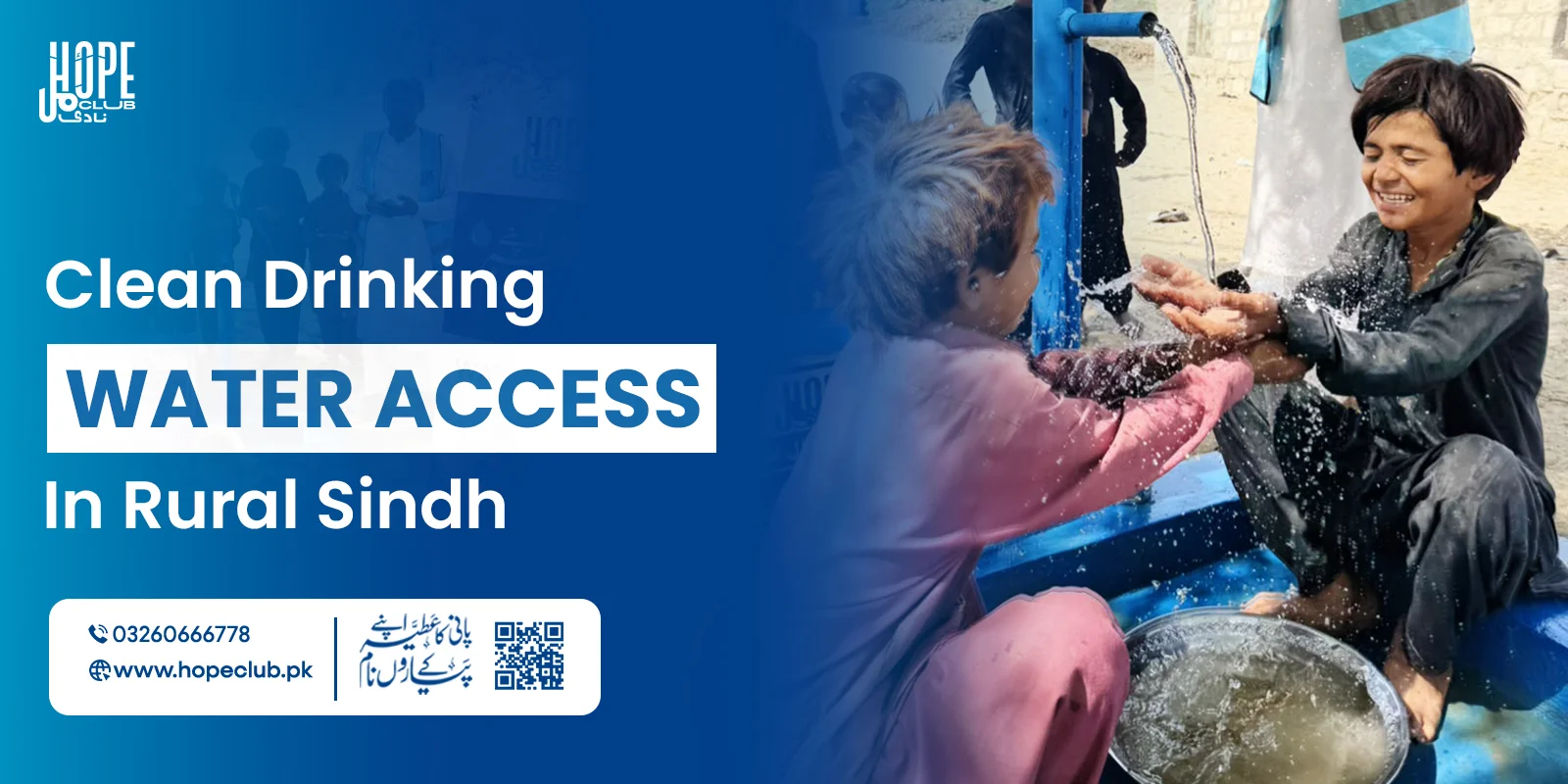
Access to safe drinking water is one of the most important foundations of a healthy community. However, thousands of families living in rural Sindh continue to face serious difficulties in accessing clean and safe water. Water sources that communities depend on for drinking, cooking, and daily activities are often affected by contamination, salinity, limited infrastructure, and environmental challenges.
Clean water is not only a basic necessity but also a key factor in improving health, education, and economic opportunities. Communities without reliable water systems often experience increased health risks, especially among children and vulnerable families. You can support sustainable clean water solutions by helping provide essential resources through Hope Club Pakistan’s clean water initiatives. Visit our Donate Hand Pump project to help families access safer drinking water.
The water crisis in rural Sindh is connected to multiple factors, including groundwater quality issues, climate challenges, floods, and limited access to modern water filtration systems. Many villages depend on underground water sources that may contain harmful substances or excessive minerals, making daily life more difficult for local communities.
Through awareness, humanitarian support, and sustainable water projects, organizations can help reduce these challenges. Hope Club Pakistan works to support vulnerable communities by developing solutions that improve access to clean drinking water and strengthen community resilience. Learn more about our humanitarian work and initiatives through the Hope Club Pakistan website.
Understanding Water Quality Challenges in Rural Sindh
Rural Sindh has a unique geographical and environmental landscape. Many communities are located in areas where access to public water infrastructure remains limited. As a result, families often depend on hand pumps, wells, ponds, and other local water sources.
While these sources provide essential water access, their quality can vary significantly. Factors such as groundwater conditions, agricultural activities, industrial pollution, and natural environmental changes influence water safety.
One of the major challenges is groundwater contamination. In many rural areas, groundwater is the primary source of drinking water. However, the presence of excessive salts, minerals, and other contaminants can affect water quality and create long-term health concerns.
Communities living in remote areas often lack access to regular water testing facilities. Without proper testing, families may continue using unsafe water sources without knowing the potential risks. This highlights the importance of clean water awareness programs and community-based water solutions.
Current State of Drinking Water in Rural Sindh
Many rural communities across Sindh experience difficulties related to safe drinking water availability. The problem is not only about the quantity of water available but also about whether that water is suitable for human consumption.
In districts affected by environmental challenges, families may travel long distances to collect water. Women and children are often responsible for collecting water, which can affect education, employment opportunities, and overall quality of life.
Water accessibility becomes even more challenging during emergencies such as floods. Flooding can damage existing water sources, contaminate wells, and increase the spread of waterborne diseases. During such situations, humanitarian support including a flood relief package Pakistan can help affected families recover essential resources and restore basic living conditions.
Flood emergencies demonstrate why long-term water planning is necessary. Communities need sustainable water infrastructure that can continue functioning during difficult environmental conditions.
Major Causes of Water Contamination in Sindh
The water quality challenges in rural Sindh are caused by several interconnected environmental and human factors. Understanding these causes is important for developing effective solutions.
Groundwater contamination is one of the most common concerns. Since many rural households depend on underground water, changes in groundwater quality directly affect daily life. Natural geological conditions can introduce minerals and salts into groundwater, while human activities may increase pollution levels.
Agricultural activities also influence water quality. Excessive use of fertilizers and pesticides can allow chemicals to enter groundwater sources. Over time, this can affect the safety of drinking water and create environmental challenges.
Groundwater Contamination and Salinity Issues
Salinity is one of the major water quality concerns in parts of Sindh. High levels of dissolved salts can make groundwater unsuitable for drinking and household use.
Communities living in areas with saline groundwater often face limited options. They may need to travel to nearby locations to access better-quality water or depend on external support for clean water supplies.
The issue is particularly serious in areas where alternative water sources are unavailable. Without proper filtration systems or improved infrastructure, families may continue using poor-quality water because they have no other choice.
Sustainable interventions such as filtration plants, water testing programs, and solar-powered water systems can provide long-term solutions. Hope Club Pakistan supports initiatives focused on improving access to safe water through community-based projects.
You can also support clean water efforts through sustainable solutions such as a Donate Solar Water Pump project that helps communities develop reliable water access systems.
Impact of Floods on Water Quality in Rural Sindh
Flooding creates additional pressure on already vulnerable water systems. When floods occur, clean water sources can become contaminated due to sewage overflow, damaged infrastructure, and polluted surface water.
After floods, families often struggle to access safe drinking water. Contaminated water can increase the risk of diseases and make recovery more difficult for affected communities.
Emergency support plays an important role during these situations. A well-planned flood relief package Pakistan can include essential supplies, clean drinking water support, hygiene materials, and assistance for families recovering from disasters.
However, long-term recovery requires more than emergency assistance. Communities need improved water infrastructure, stronger disaster preparation, and sustainable solutions that reduce future risks.
Organizations working in affected areas can help communities rebuild stronger systems. Through clean water projects and humanitarian assistance, families can regain access to essential resources and improve their living conditions.
Health Impact of Unsafe Drinking Water
Unsafe drinking water can have serious consequences for community health. When water contains harmful contaminants, bacteria, or excessive minerals, it may increase exposure to different health problems.
Children are among the most vulnerable groups affected by poor water quality. Repeated exposure to unsafe water can impact their health, nutrition, and ability to participate in education.
Waterborne diseases are a major concern in communities where clean water access is limited. Conditions such as diarrhea and other infections can spread more easily when families lack safe drinking water and sanitation facilities.
Improving water quality is therefore not only an environmental issue but also a public health priority. Providing safe water sources helps communities build healthier and more stable futures.
Communities Most Affected by Water Quality Challenges in Rural Sindh
Water quality challenges are not experienced equally across all communities in Sindh. Rural areas with limited infrastructure, extreme weather conditions, and fewer public services often face greater difficulties in accessing safe drinking water.
Many villages depend on traditional water sources such as hand pumps, wells, and groundwater reserves. When these sources become contaminated or unavailable, families have limited alternatives. This situation affects daily activities including cooking, cleaning, farming, and livestock care.
Areas including Tharparkar, Badin, Dadu, Larkana, and other rural districts experience different forms of water-related challenges. Some communities face groundwater salinity, while others experience problems caused by floods, drought conditions, or limited access to water infrastructure.
In Tharparkar, water availability is often connected with environmental conditions and rainfall patterns. During dry periods, communities may experience increased pressure on existing water sources. In coastal areas of Sindh, saltwater intrusion can also influence groundwater quality.
Supporting vulnerable communities requires solutions designed according to local needs. A successful clean water project must consider geography, community participation, water testing, and long-term maintenance.
The Importance of Clean Water Solutions for Rural Communities
Providing clean water in rural Sindh requires more than temporary assistance. Sustainable solutions help communities build reliable access to safe drinking water while reducing dependence on emergency support.
One effective approach is installing hand pumps in areas where groundwater sources are suitable. Hand pumps provide communities with easier access to water and reduce the distance families travel to collect it.
Water filtration systems are another important solution. These systems help improve water quality by reducing harmful substances and making water safer for household use.
Solar-powered water systems are also becoming valuable solutions in remote areas. Since many rural communities experience electricity limitations, solar technology can provide a reliable way to operate water pumps and supply systems.
Community education is equally important. Teaching families about water storage, hygiene practices, and safe water handling helps maximize the benefits of clean water projects.
Hope Club Pakistan focuses on humanitarian solutions that support communities facing water challenges. Through initiatives such as clean water projects, families can gain better access to essential resources and improve their quality of life.
You can contribute to these efforts by supporting a Donate Water Tank for Gaza project that reflects the importance of humanitarian water support for vulnerable populations.
How NGOs Help Address Water Problems in Sindh
Non-governmental organizations play an important role in supporting communities affected by water challenges. NGOs work alongside local communities to identify problems, develop solutions, and provide essential assistance.
Water projects supported by humanitarian organizations often include:
- Installation of hand pumps
- Water filtration systems
- Solar-powered water solutions
- Emergency water distribution
- Community awareness programs
- Water quality assessments
These projects help communities move from short-term survival toward sustainable development.
During natural disasters such as floods, humanitarian organizations also provide emergency support. A comprehensive flood relief package Pakistan can help affected families receive necessary supplies, including clean drinking water assistance and recovery resources.
However, lasting change requires continuous investment in infrastructure. Water projects must include maintenance plans, local involvement, and monitoring systems to ensure long-term benefits.
Hope Club Pakistan works to support vulnerable communities through humanitarian programs focused on essential needs, including clean water access. The organization aims to create meaningful impact by connecting donors with communities requiring support.
Hope Club Pakistan’s Clean Water Initiatives
Hope Club Pakistan is a humanitarian organization working to support communities through projects focused on essential needs, including safe drinking water access.
Clean water projects are designed to address challenges faced by families living in areas where water infrastructure is limited. These initiatives focus on providing practical and sustainable solutions that improve daily living conditions.
Some of the key areas of support include:
- Installing hand pumps in communities with limited water access
- Supporting water availability during emergencies
- Developing sustainable water infrastructure
- Helping vulnerable families access essential resources
A hand pump can make a significant difference for a rural family. It reduces the need for long-distance water collection and provides a more convenient source of water for daily household needs.
You can support this mission by contributing to Hope Club Pakistan’s Donate Hand Pump project. Your support can help provide communities with improved access to clean drinking water.
Water challenges are often connected with other humanitarian needs. During emergencies, communities may require food, shelter, medical assistance, and water support. This is why integrated humanitarian responses, including a flood relief package Pakistan, are important for helping families recover after disasters.
Sustainable Water Technologies for Rural Sindh
Modern technology can play an important role in solving rural water challenges. Sustainable water solutions help communities access reliable water supplies while reducing environmental impact.
Solar-powered water pumps are one example of technology that can benefit remote communities. These systems use renewable energy to operate water pumps, making them suitable for areas where electricity access is limited.
Water filtration technology can also improve drinking water quality. Depending on local conditions, filtration systems can help remove impurities and improve water safety.
Rainwater harvesting is another potential solution, especially in areas where rainfall patterns allow water collection. Proper storage systems can help communities maintain water availability during dry periods.
The success of any water technology depends on local conditions. Water testing, community involvement, and proper maintenance are necessary to ensure long-term effectiveness.
Why Community Participation Matters in Water Projects
Successful water projects are built with communities, not only for communities. Local involvement helps ensure that solutions match actual needs and continue functioning after project completion.
Community participation can include:
- Selecting suitable project locations
- Supporting maintenance activities
- Learning water management practices
- Sharing feedback about challenges
When communities understand how systems work, they are more likely to protect and maintain water resources.
Women and local community members often play an important role because they are closely involved in household water management. Including community voices creates more effective and sustainable outcomes.
Humanitarian organizations that combine infrastructure support with awareness programs can create stronger long-term impacts.
Frequently Asked Questions About Water Quality Challenges in Rural Sindh
Why is drinking water unsafe in rural Sindh?
Many rural communities in Sindh depend on groundwater sources that may contain high salt levels, natural minerals, or contamination caused by environmental and human activities. Limited access to water treatment facilities can make safe drinking water difficult to obtain.
What are the main causes of groundwater contamination in Sindh?
Groundwater contamination can occur due to natural geological conditions, salinity, agricultural chemicals, industrial pollution, and flood-related contamination.
Which areas of Sindh face water quality problems?
Different rural areas across Sindh experience water challenges, including communities in Tharparkar, Badin, Dadu, Larkana, and other districts where water infrastructure and environmental conditions create difficulties.
How does unsafe water affect children?
Unsafe water can increase health risks among children and may affect their nutrition, education, and overall development. Access to clean water helps create healthier environments for children and families.
How can communities get clean drinking water in rural Sindh?
Communities can benefit from solutions such as hand pumps, filtration systems, solar water pumps, water testing programs, and improved water infrastructure.
How can people support clean water projects in Pakistan?
Individuals can support humanitarian organizations by contributing to water projects, sharing awareness, and helping provide resources for communities facing water challenges.
Building a Future With Safe Water Access in Rural Sindh
Water quality challenges in rural Sindh are complex and require long-term commitment, community involvement, and sustainable solutions. Access to safe drinking water affects every part of community life, from health and education to economic opportunities.
Families living in vulnerable areas should not have to depend on unsafe water sources for their daily needs. Improving water access requires collaboration between communities, humanitarian organizations, donors, and local stakeholders.
Hope Club Pakistan continues working toward supporting communities through practical humanitarian initiatives. By focusing on clean water projects, sustainable solutions, and community support, meaningful progress can be created for families who need assistance.
During disasters and emergencies, support systems become even more important. Providing resources through initiatives such as a flood relief package Pakistan can help affected communities recover and rebuild with greater resilience.
You can become part of this mission by supporting clean water access for vulnerable communities. Your contribution can help provide essential water solutions and create lasting positive change.
Support Hope Club Pakistan’s clean water initiative today:
Donate a Hand Pump and help provide communities with improved access to safe drinking water:
https://hopeclub.pk/product/donate-hand-pump/
Together, we can support healthier communities, strengthen resilience, and help create a future where every family has access to clean and safe water.SEO Title: How Hope Club Selects Water Project Locations
SEO Focus Keyphrase: Water project locations Pakistan
Meta Description: Discover how Hope Club Pakistan selects water project locations through research, community assessments, and transparent humanitarian planning.
URL:
how-hope-club-selects-water-project-locations/
WordPress Tag: Water Projects Pakistan, Clean Water Projects, Hope Club Pakistan, Water Charity Pakistan, Hand Pump Projects Pakistan, Community Water Projects, Flood Relief Pakistan, Humanitarian Projects Pakistan
How Hope Club Selects Water Project Locations in Pakistan
Access to clean and safe drinking water is one of the most important needs for every community. While many people turn on a tap and receive clean water instantly, thousands of families in underserved areas of Pakistan still face daily struggles to find reliable water sources. For these communities, a water project is not only a facility; it is a life-changing solution that improves health, education, dignity, and overall quality of life.
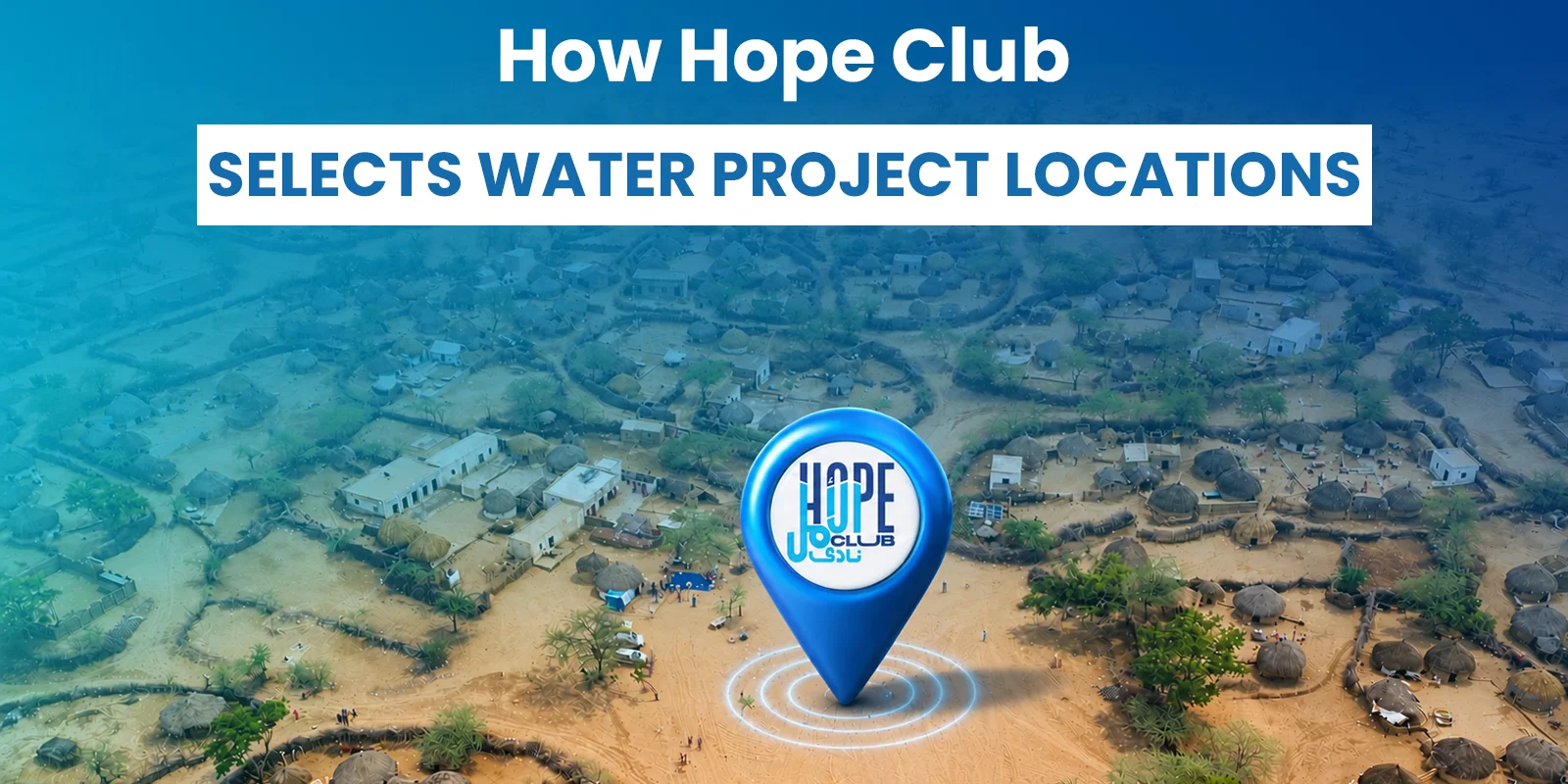
At Hope Club Pakistan, every water project begins with understanding people, communities, and their real needs. We do not select locations randomly. Our team follows a structured approach to identify communities where access to safe drinking water can create meaningful and sustainable impact.
If you want to support communities that need reliable water solutions, you can contribute by supporting a hand pump project through our water initiatives: Donate a Hand Pump
Hope Club Pakistan believes that humanitarian work should be based on transparency, research, and responsibility. Our approach focuses on reaching communities where water challenges are most severe and where support can bring long-term benefits.
Understanding the Need for Water Projects in Pakistan
Pakistan has many communities where access to clean drinking water remains a major challenge. Rural villages, remote areas, and communities affected by natural disasters often experience difficulties due to limited water infrastructure, unsafe water sources, and increasing environmental challenges.
In many villages, families travel long distances every day to collect water. This responsibility often falls on women and children, reducing the time available for education, employment, and personal development. Contaminated water sources can also increase health risks and affect the well-being of entire communities.
Water projects help solve these challenges by bringing safe and accessible water sources closer to families. However, selecting the right location requires careful planning. A project must reach people who genuinely need support and must be designed according to the conditions of that specific area.
Hope Club Pakistan works to identify communities where clean water access can improve daily life. Through our humanitarian programs, we focus on creating solutions that respond to real community requirements.
Learn more about our humanitarian efforts and community support programs by visiting Hope Club Pakistan.
How Hope Club Identifies Communities That Need Water Projects
The first step in selecting a water project location is identifying communities facing serious water challenges. Hope Club Pakistan collects information from different sources to understand where support is most needed.
Potential locations may be identified through:
· Community requests
· Local recommendations
· Field observations
· Previous humanitarian projects
· Disaster-affected area assessments
· Local partner coordination
Every community has different challenges. Some areas may have no nearby water source, while others may have existing sources that are unsafe or insufficient for the growing population.
Our team reviews these factors before deciding whether a water project can provide meaningful support. This ensures that resources are directed toward communities where the impact will be valuable.
A major part of our assessment includes understanding the number of families affected, current water availability, and the difficulties people experience while accessing water.
Step 1: Conducting Field Assessments Before Starting a Water Project
Before starting any project, field assessment plays an important role in decision-making. A water project requires more than identifying a village name. It requires understanding the actual conditions on the ground.
During assessments, Hope Club Pakistan considers several important factors:
· Availability of existing water sources
· Distance people travel for water
· Quality and safety of available water
· Number of families depending on the source
· Community willingness and involvement
· Installation feasibility
Field assessments help ensure that projects are based on real needs rather than assumptions.
For example, a community may have a water source nearby, but if that source is contaminated or unable to meet daily requirements, additional support may still be necessary.
This process allows Hope Club to make informed decisions and develop projects that provide practical solutions.
Evaluating Water Availability and Community Needs
Water availability is one of the most important factors when selecting project locations. Our team evaluates whether communities have sufficient access to clean water throughout the year.
Some communities face seasonal water shortages due to:
· Dry weather conditions
· Flood damage
· Limited groundwater access
· Population growth
· Lack of infrastructure
Understanding these challenges helps determine the type of project required.
Depending on community conditions, different solutions may be considered, including hand pumps, solar water pumps, and water storage systems.
For communities requiring sustainable water solutions, Hope Club also supports initiatives such as Donate Solar Water Pump projects that help provide reliable water access.
Step 2: Prioritizing High-Impact Water Project Locations
Not every area has the same level of water-related challenges. Therefore, Hope Club Pakistan prioritizes locations where support can create the greatest positive impact.
The selection process considers:
Communities Without Safe Drinking Water
Communities with no reliable source of clean drinking water are given significant attention because families in these areas face daily difficulties.
Remote and Underserved Villages
Many remote villages have limited access to basic facilities. Reaching these communities helps extend humanitarian support to people who may have fewer available resources.
Disaster-Affected Areas
Natural disasters can severely damage water systems. Floods can contaminate water sources, destroy infrastructure, and increase the need for emergency support.
During emergencies, solutions such as a flood relief package Pakistan initiative can help families recover by addressing urgent needs, including access to essential resources.
Low-Income Communities
Economic conditions also influence water accessibility. Families with limited resources often cannot afford alternative water solutions, making community-based projects especially important.
How Flood-Affected Communities Are Considered for Water Support
Floods can create serious challenges for drinking water access. When flooding occurs, existing water sources may become contaminated, damaged, or completely unavailable.
Hope Club Pakistan evaluates flood-affected communities to understand their immediate and long-term requirements.
A flood relief package Pakistan response may include essential assistance designed to support families during difficult circumstances. Alongside emergency support, restoring access to clean water is an important part of community recovery.
Water projects in flood-affected areas require careful planning because environmental conditions may change after disasters. Teams must consider safe locations, accessibility, and sustainability before implementing solutions.
Supporting communities through a flood relief package Pakistan program allows humanitarian organizations to respond quickly while also planning long-term recovery efforts.
Step 3: Understanding Community Involvement in Water Projects
Community participation is an essential part of successful water projects. A project becomes more sustainable when local people understand its importance and participate in protecting the resource.
Before implementation, Hope Club Pakistan considers:
· Community feedback
· Local requirements
· Project accessibility
· Long-term maintenance possibilities
When communities are involved from the beginning, they develop a stronger connection with the project.
This approach helps ensure that water facilities continue benefiting families after installation.
Why Location Selection Matters for Long-Term Impact
Choosing the right location determines how effectively a water project can support people. A properly selected location can provide benefits for many years, while poor planning can reduce the overall impact.
Hope Club Pakistan focuses on creating projects that are:
· Need-based
· Community-focused
· Sustainable
· Transparent
· Impact-oriented
Every selected location represents a commitment to improving lives through access to safe water.
Supporting the right communities means donors can contribute toward solutions that directly address real challenges.
Step 4: Evaluating Project Feasibility Before Installation
Selecting a water project location is not only about identifying communities with water problems. Before starting any project, Hope Club Pakistan evaluates whether the selected location is suitable for a long-term water solution.
A detailed feasibility review helps determine whether the project can successfully provide benefits to the community. This process includes evaluating environmental conditions, installation requirements, community access, and future sustainability.
A location may have a serious water need, but technical factors must also be considered to ensure the project delivers lasting results.
Support sustainable water solutions and help communities gain access to safe drinking water through our Donate Hand Pump Project.
Assessing Ground Conditions and Water Availability
One important factor in selecting water project locations is understanding the ground conditions of the area.
Before installation, teams consider:
· Availability of groundwater
· Suitable location for installation
· Accessibility for construction work
· Safety of the water source
· Long-term usability
Different areas of Pakistan have different geographical conditions. Some regions may have easily accessible groundwater, while others may require alternative solutions.
For example, areas with high sunlight availability may benefit from solar-powered water solutions. Hope Club Pakistan supports sustainable initiatives like Donate Solar Water Pump projects to help communities access reliable water systems.
Proper assessment reduces challenges and ensures that humanitarian resources are used effectively.
Selecting the Right Water Solution for Each Community
Every community has unique requirements. A solution that works in one area may not always be suitable for another location.
Hope Club Pakistan considers several factors before deciding which type of water project should be implemented.
Possible solutions include:
· Hand pump installation
· Solar water pumps
· Water storage systems
· Emergency water support
For smaller villages with groundwater availability, hand pumps can provide a practical and accessible solution. In areas requiring larger systems, solar water pumps may offer better long-term benefits.
The objective is always to select a solution that matches the community’s actual needs.
Step 5: Working with Local Communities Before Starting Projects
Local communities are the heart of every successful humanitarian project. Before implementing a water project, Hope Club Pakistan works to understand the experiences and expectations of the people who will use the facility.
Community discussions help answer important questions:
· How many families need access to water?
· How far do residents travel to collect water?
· What challenges do women and children face?
· Which location would provide the easiest access?
This community-focused approach helps ensure that projects are practical and beneficial.
When people are involved in the planning process, they feel ownership of the project and are more likely to maintain and protect the water facility.
Understanding the Daily Challenges Faced by Communities
Behind every water project is a human story. Many families in underserved areas spend hours searching for clean water.
Women and children are often responsible for collecting water, which can affect:
· School attendance
· Employment opportunities
· Family responsibilities
· Health conditions
Providing nearby access to clean water can transform daily routines and create opportunities for communities.
Hope Club Pakistan focuses on these human experiences when evaluating potential project locations.
Our mission is not only to provide infrastructure but also to improve quality of life for families.
Step 6: Monitoring and Verifying Water Projects After Completion
The responsibility of a humanitarian organization does not end after installation.
Hope Club Pakistan believes that monitoring and verification are essential parts of every water project.
After completion, teams focus on:
· Confirming project completion
· Reviewing community usage
· Collecting feedback
· Documenting project impact
· Maintaining transparency with supporters
These steps help ensure that projects continue serving communities effectively.
Donors want to know that their contributions create real impact. Transparent reporting helps build confidence and demonstrates how support reaches people who need it.
Transparency Behind Every Hope Club Water Project
Trust is one of the most important elements of humanitarian work.
At Hope Club Pakistan, transparency guides every stage of project development, from identifying communities to reporting completed initiatives.
Transparency includes:
· Clear project information
· Community-focused planning
· Real project updates
· Photographs and documentation
· Impact reporting
By sharing information about our work, we help supporters understand how humanitarian projects are developed and implemented.
You can explore more about our mission, projects, and community support activities through Hope Club Pakistan.
How Donors Can Understand the Impact of Water Projects
Many donors want to know how their contributions create meaningful change.
A water project can impact communities by improving:
Health and Hygiene
Access to clean water helps families maintain better hygiene practices and reduces dependence on unsafe water sources.
Education Opportunities
When children spend less time collecting water, they may have more opportunities to attend school and focus on learning.
Community Development
Reliable water access supports stronger communities by improving daily living conditions.
Emergency Recovery
During disasters, restoring water access becomes an important part of helping families rebuild their lives.
For communities affected by emergencies, a flood relief package Pakistan initiative can provide essential support while recovery efforts continue.
Water Projects in Flood-Affected Areas of Pakistan
Floods are among the disasters that can severely affect water availability. Floodwater can contaminate wells, damage hand pumps, and limit access to safe drinking water.
When responding to affected communities, organizations must carefully evaluate:
· Damage to existing water sources
· Immediate drinking water requirements
· Safe locations for new installations
· Long-term recovery needs
A flood relief package Pakistan program can support families facing urgent challenges after natural disasters.
However, long-term recovery requires sustainable solutions that restore reliable access to essential resources.
Water projects play an important role in helping flood-affected communities rebuild with dignity.
How Hope Club Uses Research and Experience for Better Water Solutions
Humanitarian projects require continuous learning and improvement.
Hope Club Pakistan uses previous project experiences, community feedback, and field observations to improve future water initiatives.
Each project provides valuable information about:
· Community needs
· Environmental challenges
· Implementation methods
· Long-term impact
This experience helps create better strategies for future water projects across Pakistan.
The Importance of Choosing the Right Water Project Location
A successful water project begins with the right decision: choosing a location where support can create meaningful change.
The selection process involves:
· Identifying communities in need
· Conducting field assessments
· Understanding water challenges
· Evaluating technical possibilities
· Working with local communities
· Monitoring project outcomes
This careful approach ensures that every project is designed around real people and real needs.
Support Hope Club’s Mission to Provide Clean Water Access
Clean water changes live. Behind every successful water project is careful planning, community understanding, and a commitment to helping people who need support.
Hope Club Pakistan continues working to identify communities where access to safe drinking water can create meaningful improvement.
Every contribution helps transform a water challenge into a sustainable solution. You can support a community by contributing toward a water project and helping families gain access to safe drinking water.
Support a life-changing initiative today through our Donate Hand Pump Project.
You can also explore additional humanitarian support opportunities, including Donate Water Tank for Gaza and other water assistance programs.
Together, communities, donors, and humanitarian organizations can help create a future where more families have reliable access to clean water.
Conclusion: Building a Future with Safe Water Access
Selecting water project locations requires understanding people, communities, and real-world challenges. Hope Club Pakistan follows a responsible process based on research, field assessment, community involvement, and transparency.
A water project is more than construction. It represents hope, health, dignity, and opportunity for families.
From rural villages to flood-affected communities, every project begins with identifying where support is needed most.
Through initiatives such as a flood relief package Pakistan response and sustainable water projects, Hope Club continues working toward improving access to essential resources.
If you want to help provide clean drinking water to communities in need, you can support our mission by donating toward a Hand Pump Water Project.
Frequently Asked Questions
How does Hope Club select water project locations?
Hope Club selects water project locations by evaluating community needs, water availability, population requirements, accessibility, and long-term project feasibility.
Does Hope Club visit communities before installing water projects?
Yes, field assessment and community understanding are important parts of selecting suitable locations.
What factors determine where a water project is needed?
Factors include lack of safe drinking water, community size, existing water sources, geographical conditions, and urgency of need.
Can donors recommend a location for a water project?
Supporters can share information about communities facing water challenges. Hope Club evaluates each opportunity based on humanitarian needs and feasibility.
How does Hope Club ensure water projects create impact?
Hope Club focuses on proper assessment, transparent implementation, community involvement, and project monitoring.
Why are some areas prioritized for water projects?
Areas with severe water shortages, remote communities, and disaster-affected populations may require urgent assistance due to greater challenges.
How do water projects help rural communities?
Water projects reduce the distance families travel for water, improve hygiene, and support healthier living conditions.
What types of water projects does Hope Club support?
Hope Club supports different water solutions depending on community needs, including hand pumps, solar water systems, and emergency water support.