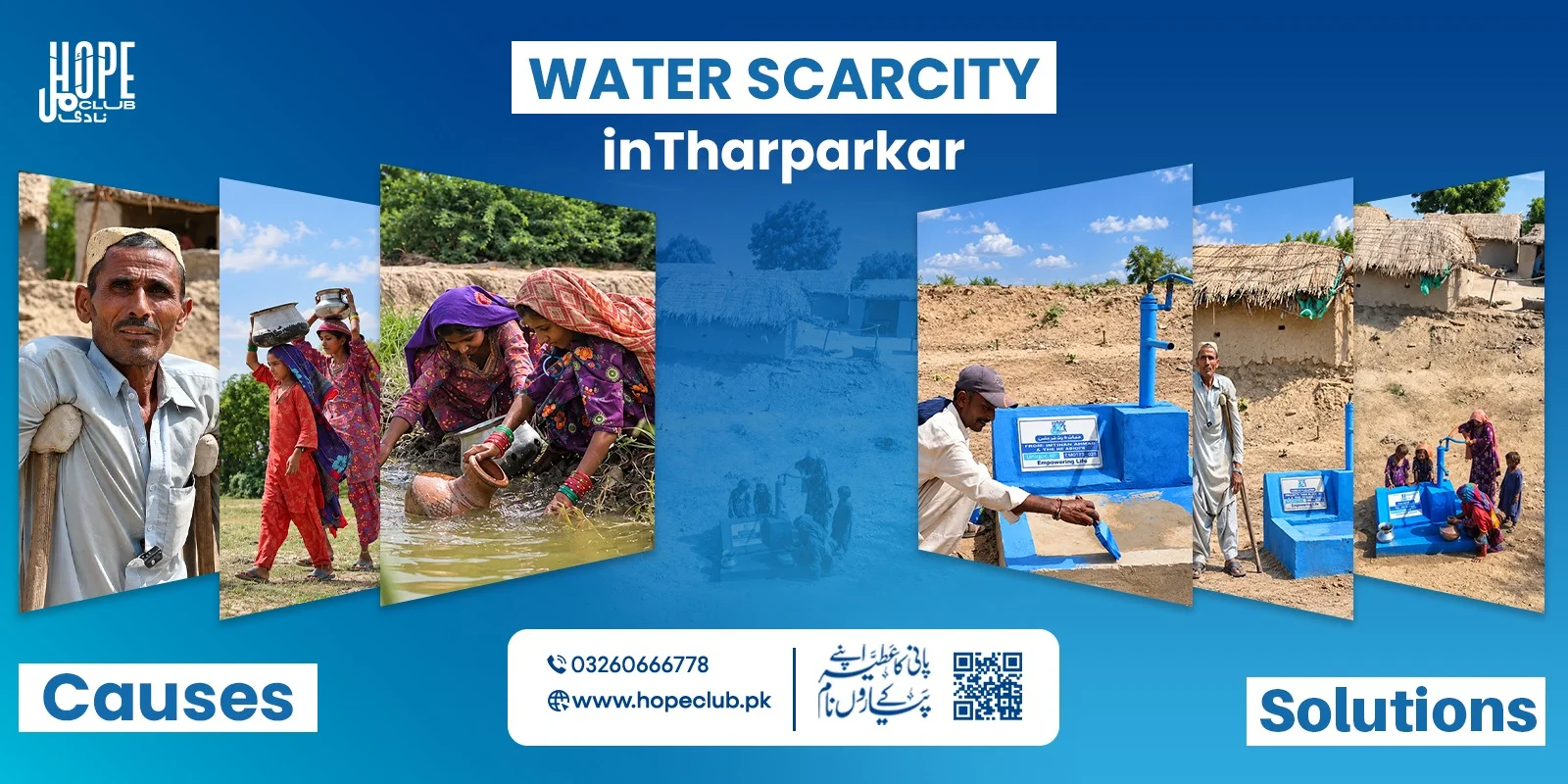

Across rural Pakistan, temporary water relief often solves today’s shortage but fails to secure tomorrow’s supply. The need for renewable water projects in Pakistan has never been more urgent. While water tank deliveries and short-term aid offer immediate help, they rarely build lasting stability.
In provinces like South Punjab, Thar, and interior Sindh, access to safe water determines health, education, and economic survival. A true long-term water charity must move beyond emergency relief and invest in systems that continue functioning year after year. Solar-powered water systems are among the most reliable pathways to the clean, sustainable water Pakistan urgently needs.
Why Pakistan Needs Long-Term Water Infrastructure
The water crisis Pakistan faces is not temporary. It is structural. More than 21 million people lack access to safe drinking water. In rural communities across South Punjab and interior Sindh, access to groundwater remains inconsistent and often contaminated. The ongoing lack of clean water in Pakistan disproportionately affects villages where infrastructure investment has historically been limited.
The rural water shortage Pakistan faces creates layered consequences:
- Increased rates of waterborne illness
- Reduced school attendance due to water collection duties
- Higher household medical expenses
- Limited agricultural productivity
Short-term tanker relief or bottled distribution addresses immediate thirst. But once the supply ends, the crisis returns.
Renewable Water Projects: The Future of Sustainable Charity
When we talk about renewable water projects in Pakistan, we are talking about systems designed to operate for decades, not days. Renewable infrastructure uses sustainable energy sources, primarily solar power, to lift and distribute groundwater without recurring dependence on fuel.
Unlike traditional aid models that require repeated financial input, renewable systems create long-term independence. Once installed, they operate using sunlight, one of Pakistan’s most abundant natural resources.
This is what makes renewable systems the foundation of a truly sustainable water charity in Pakistan.
What Makes a Water Project “Renewable”?
A renewable clean water project typically includes:
- Solar photovoltaic panels
- Submersible deep-bore pumps
- Elevated storage tanks (where required)
- Structured distribution points
- Minimal reliance on external energy sources
The system converts sunlight into electrical energy, powering pumps that draw groundwater from significant depths. Because sunlight is freely available, operational costs remain low compared to diesel-powered alternatives.
This model creates water independence rather than water dependency.
Environmental and Economic Benefits
A renewable water system delivers both ecological and financial advantages.
- Low Operating Cost: Diesel-powered pumps require constant fuel purchases. Solar systems operate with minimal ongoing expense, significantly reducing lifetime cost.
- Long Lifespan: Most solar-powered water systems function effectively for 10–15 years with maintenance. This extended lifespan spreads initial investment across a decade or more of benefit.
- Scalable for Villages: Unlike individual hand pumps, renewable solar systems are engineered to support entire communities. One installation can serve 200–500+ people daily.
- Climate-Resilient Solution: As Pakistan faces rising temperatures and groundwater stress, renewable systems provide stable output without increasing carbon emissions. They align with environmental responsibility while solving humanitarian challenges.
Why Renewable Projects Make Sense
From a donor perspective, the return on investment is significant.
If a solar-powered system serves 300 people daily for 12 years:
300 × 365 × 12 = 1,314,000 safe water access instances
That is over 1.3 million moments of safe hydration from a single installation.
Compared to repeated short-term aid distributions, renewable infrastructure multiplies impact without multiplying cost.
This is the shift from temporary charity to structural change.
Renewable water systems are not emergency responses. They are community water infrastructure built to outlast seasonal shortages and economic fluctuations.
Solar Water Pumps: Decades of Clean Water Access
Among all renewable water projects in Pakistan, solar-powered systems stand out as the most practical and scalable solution for rural communities. A properly installed solar water pump system in Pakistan can serve hundreds of people daily while operating reliably for more than a decade.
This is not temporary relief. It is long-term water security.
How Solar Water Pumps Work
A solar water system operates through a simple but powerful mechanism:
- Solar panels capture sunlight.
- The panels convert sunlight into electricity.
- Electricity powers a submersible pump installed deep within a borehole.
- Water is lifted to the surface and distributed to the community.
Because the system relies on renewable solar energy, it does not require fuel purchases or grid electricity. This makes it highly suitable for remote villages in South Punjab, Thar, and interior Sindh, where power infrastructure may be unreliable or absent.
Community Scale Impact
Unlike small manual pumps that serve limited households, a single solar installation can provide:
- Clean drinking water for 200–500+ individuals
- Shared access points for multiple families
- Improved sanitation for schools and mosques
- Water availability for small agricultural support
- Reduced the burden on women and children collecting water
This level of scale transforms water from a daily struggle into a shared community resource.
Over a 10–15-year lifespan, the cumulative benefit becomes extraordinary. If a system serves 300 individuals daily for 12 years:
300 × 365 × 12 = 1,314,000 safe water access instances
That means over one million instances of hydration, cooking, cleaning, and hygiene are supported by a single installation.
High-Impact Sadaqah Jariyah
For those motivated by faith, the opportunity to donate a solar water pump in Pakistan represents a powerful form of long-term sadaqah jariyah. As long as water flows, the benefit continues. Every sip taken, every meal prepared, and every act of cleanliness performed contributes to ongoing reward.
Because the system has been functioning for years, the impact does not stop after installation. It compounds daily.
This is why solar water infrastructure is often considered one of the most meaningful forms of long-term sadaqah jariyah; the benefit reaches hundreds and continues for decades.
Supporting a solar-powered water system means building something that will outlast seasonal aid cycles and serve future generations.
Cost vs Impact: Why Renewable Projects Deliver Better Value
When evaluating the cost of the water project in Pakistan, it is essential to compare short-term relief with long-term infrastructure.
Traditional water aid often requires repeated funding. Tankers must return. Bottles must be repurchased. Emergency distribution must be organised repeatedly.
Renewable solar systems, by contrast, involve a higher upfront investment but dramatically lower lifetime cost.
Comparison Overview
| Factor | Traditional Water Aid | Solar Water Project |
| Duration | Days or weeks | 10–15+ years |
| People Served | Limited | 200–500+ Daily |
| Operating Cost | Recurring | Minimal |
| Energy Source | Fuel/Grid | Solar (renewable) |
| Long-Term Stability | Temporary | Sustainable |
Impact Math Perspective
If a solar water pump serves 300 people daily for 12 years:
300 × 365 × 12 = 1,314,000 safe water access instances
From a cost-efficiency standpoint, the cost per beneficiary of a solar water pump in Pakistan becomes significantly lower over time than repeated emergency aid.
Renewable infrastructure delivers better humanitarian ROI because it spreads benefits across years, not days.
How Hope Club Ensures Transparent Project Delivery
Choosing a trusted water charity in Pakistan requires proof of process, not marketing language. Hope Club Pakistan follows a proper delivery model for renewable water projects.
Project Implementation Process
Every renewable installation includes:
- Site assessment and groundwater evaluation
- Bore feasibility review
- Professional drilling and installation
- Solar panel configuration
- Pump testing and water flow validation
- Community handover
- Transparency continues after installation.
Donors typically receive:
- Photo documentation
- Video confirmation
- GPS location details
- Completion verification
This system ensures that renewable clean water projects are not only installed, but verified and traceable.
How to Sponsor a Renewable Water Project Today
If you are searching for how to donate a solar water pump to Pakistan, the process is straightforward and secure.
1. Choose a Renewable Project
Visit the official donation platform and select a solar-powered water project aligned with your intended impact scale.
2. Complete Contribution through secure process
Confirm your selected project and complete the secure online transaction. Official channels ensure accurate allocation and documentation.
3. Receive Installation Proof
After installation, you receive verification through documented evidence, ensuring your renewable water project is fully implemented. Your contribution becomes a long-term sadaqah jariyah serving hundreds daily.
Be the Reason Clean Water Flows for Generations
Donating clean water to Pakistan through renewable infrastructure creates an impact measured in decades.
A solar-powered water system does not just hydrate a village today, it secures clean water access for future generations. Children grow up healthier. Families save time. Communities strengthen economically and socially.
Renewable water charity is not temporary compassion.
- It is a permanent prevention.
- It is sustainable community water infrastructure.
- It is long-term sadaqah jariyah.
- One installation.
- Hundreds of lives.
- Decades of impact.
Conclusion
Renewable water infrastructure offers one of the most meaningful solutions to Pakistan’s ongoing water crisis. Instead of relying on short-term aid that must be repeated, renewable water projects in Pakistan provide stable systems designed to serve communities for decades.
Solar-powered water pumps use sustainable energy to lift groundwater efficiently, allowing entire villages to gain reliable access to safe drinking water. With lifespans that can exceed 10–15 years, these systems deliver millions of instances of clean water access and protect families from the health and economic risks associated with contaminated sources.
FAQs
1. How long does a solar water pump last?
A properly installed solar water pump can operate effectively for 10–15 years with maintenance. The panels are designed for long-term outdoor durability. Because the system runs on renewable energy, operational stress is reduced. This extended lifespan makes it ideal for sustainable clean-water initiatives in Pakistan.
2. How many people benefit from one renewable water project?
A single solar installation can serve 200 to 500+ individuals, depending on the village’s size. The system supports multiple households simultaneously. Schools and mosques may also benefit. Over time, the cumulative impact reaches millions of water users.
3. Why are renewable water projects better than tanker aid?
Tanker aid solves immediate shortages but requires repeated funding. Renewable infrastructure provides long-term stability. Solar systems eliminate fuel dependency and operate independently. Over time, renewable systems offer greater value per beneficiary.
4. What regions in Pakistan need renewable water systems most?
South Punjab, Thar, and interior Sindh face severe groundwater and infrastructure challenges. Rural communities in these regions often lack reliable systems. Renewable installations provide stability where traditional systems fail.
5. What makes solar water charity environmentally sustainable?
Solar systems rely on renewable energy rather than diesel or grid electricity. This reduces carbon emissions and fuel dependency. Low operating costs also increase financial sustainability. Renewable clean water projects align environmental and humanitarian goals.
6. Is sponsoring a solar pump considered sadaqah jariyah?
Yes. Because the system continues serving communities daily for years, the benefit is ongoing. Every use of the water contributes to sustained impact. Long-term water charity aligns closely with the principles of sadaqah jariyah.
7. How is transparency maintained?
Each project undergoes site assessment and professional installation. Donors receive photo, video, and GPS verification. Structured documentation builds trust and accountability.
8. What is the cost advantage of renewable projects?
Although upfront costs may be higher, lifetime operating costs are lower. When spread across 10–15 years, the cost per beneficiary decreases significantly. Renewable infrastructure delivers strong humanitarian ROI.
9. Can one donor sponsor an entire solar system?
Yes. Full sponsorship is possible and creates direct village-level impact. Many donors choose this option to maximise scale and reward.