
For a displaced family in Gaza, water is not simply something used to quench thirst. It is needed to prepare food, wash children, maintain basic hygiene and get through another difficult day. When families are forced from their homes and normal water systems are damaged or inaccessible, finding enough safe water becomes a daily concern. This is why a water donation for Gaza can form an important part of humanitarian assistance. If you want to respond to this need directly, you can donate a water tank for Gaza through Hope Club and support its current water relief initiative.
Water relief is also about dignity. A parent should not have to choose between saving a limited amount of water for drinking and using it for basic hygiene. A child should not have to spend hours searching for water instead of having a dependable source nearby. Humanitarian water assistance can reduce some of that pressure by helping make drinking water available closer to displaced communities. If you are looking for a practical way to contribute, visit Hope Club Pakistan to explore humanitarian and clean-water projects you can support.
Why Clean Water Is Essential for Displaced Families
Clean water supports almost every part of daily life. People need it for drinking and cooking, but it is equally important for washing hands, cleaning utensils, caring for children and maintaining personal hygiene. These ordinary activities become far more difficult when a family is living in temporary accommodation, a crowded shelter or another location away from home. In humanitarian emergencies, water access therefore affects far more than thirst; it influences health, dignity and a family’s ability to maintain a basic daily routine.
The scale of Gaza’s current water challenge remains severe. UNICEF reported in July 2026 that most of Gaza’s population remained displaced, while an estimated 82 percent of families were water insecure. UNICEF also reported that nearly 90 percent of water and sanitation infrastructure had been damaged or destroyed. These conditions create serious barriers to accessing sufficient water and maintaining safe sanitation, particularly in crowded environments.
Why Water Access Becomes Difficult During Displacement
Displacement changes how people access almost every essential service. A family that previously relied on a household connection, neighborhood supply or nearby water point may suddenly be living somewhere without the same infrastructure. At the same time, damage to pipelines, pumping systems, desalination facilities, electricity supplies and transport routes can reduce the amount of water available across a much larger area. This turns a basic household need into a logistical challenge.
UNICEF’s May 2026 WASH update described emergency water provision in Gaza as relying on several sources, including trucked water, desalination, wells and limited network supply. The same update noted that access and operational conditions directly affect how much assistance can reach communities. When infrastructure cannot meet normal demand, emergency distribution becomes increasingly important. Supporting Gaza water relief can therefore help humanitarian efforts respond where regular access has been disrupted.
How a Water Donation for Gaza Can Help?
A water donation for Gaza can contribute to emergency measures designed to help families access drinking water when normal systems are unreliable. Depending on the project and operating conditions, water assistance may involve water tanks, water trucking, storage solutions or other forms of emergency distribution. The objective is simple but essential: move usable water closer to people who need it and reduce the daily uncertainty surrounding one of life’s most basic necessities.
Hope Club’s current Gaza water project focuses on sponsored water tanks. According to the organization’s donation page, water is sourced and distributed through its on-ground partner, with local coordination used to identify communities in need and delivery confirmation recorded when field conditions allow. If providing water is the form of humanitarian support you want to priorities, support Gaza families with a water tank donation and contribute to emergency water access.
How Water Support Helps Families Every Day
The value of water becomes clearest when we look at ordinary daily routines. A family needs drinking water throughout the day. Water is required to prepare meals, wash containers, clean hands and maintain personal hygiene. Parents caring for babies, young children, older relatives or people with additional needs can face even greater challenges when supplies are restricted. A reliable delivery or nearby tank can help families manage these essential tasks with greater stability.
Water access can also reduce the time and physical effort families spend searching for a supply. UNICEF has documented how water tanks and distribution points can bring water closer to displaced families, reducing long journeys to collect it. A donation should therefore be understood not only as providing a physical resource but also as helping reduce part of the daily burden surrounding water collection. Take action through Hope Club’s Gaza clean water support project if you want your contribution focused on this essential need.
Water, Hygiene and Family Wellbeing Are Closely Connected
Drinking is only one part of water security. Families also need enough water to wash hands, clean food containers, maintain living spaces and protect basic hygiene. When the available supply is extremely limited, households are forced to priorities immediate drinking and cooking needs, leaving less water for cleaning and sanitation. This is particularly challenging in crowded shelters and displacement settings where many people may share limited facilities.
Water, sanitation and hygiene are commonly addressed together in humanitarian work because each affects the others. UNICEF’s 2026 reporting has highlighted deteriorating hygiene conditions in Gaza alongside water shortages and damaged sanitation systems. This wider context explains why clean-water relief matters: it helps families meet essential needs while supporting safer everyday routines in an environment where normal services have been heavily disrupted.
Why Children Are Particularly Affected by Water Insecurity
Children depend on adults for safe water, nutrition, hygiene and protection. In a displacement setting, parents may have to devote significant time and energy to securing basic supplies, while children experience the consequences of overcrowding and limited services. UNICEF reported that water remained a daily uncertainty for 1.1 million children in Gaza in its May 2026 WASH update.
Making drinking water more accessible can help caregivers manage daily needs with less uncertainty. It means having water available for drinking, food preparation and basic cleanliness rather than continually worrying about where the next supply will come from. This is one reason clean-water projects remain such a meaningful part of emergency humanitarian response. You can contribute by choosing to provide clean water for Gaza through a water tank.
Why Water Tanks Can Matter During a Humanitarian Emergency
Water tanks can act as temporary storage and distribution points when permanent infrastructure cannot reliably provide water to households. They allow supplied water to be stored closer to communities, shelters or family clusters so that people do not depend entirely on distant collection points. Their effectiveness, however, still depends on safe sourcing, transportation, refilling arrangements and humanitarian access.
Hope Club states that its Gaza water tank project works through field teams and local coordination, with water delivered to assigned family clusters and vulnerable households identified locally. For a donor, this creates a direct connection between a financial contribution and a defined form of water relief. If emergency water provision is your priority, donate towards a Gaza water tank through the available Hope Club project.
Emergency Relief and Long-Term Water Solutions Serve Different Needs
Emergency water assistance and long-term water infrastructure should not be treated as exactly the same thing. During an active humanitarian crisis, the immediate requirement may be moving drinking water into an area quickly through tanks or trucking. In a stable but water-stressed rural community, a permanent hand pump or solar-powered system may be more appropriate. The right intervention depends on location, infrastructure, safety, water sources and field conditions.
Hope Club supports different water approaches depending on the project area. Alongside Gaza water tanks, donors can support a water hand pump project or explore a solar water pump donation for communities in Pakistan where those systems are suitable. This distinction is important because effective humanitarian giving is about supporting the solution that matches the actual problem rather than assuming one type of water project works everywhere.
What Gaza Water Relief and Flood Relief in Pakistan Have in Common
Humanitarian emergencies can look very different, but the first needs faced by displaced families are often similar: drinking water, food, shelter, hygiene supplies and basic protection. Someone searching for a flood relief package Pakistan is usually looking for a practical way to support people whose normal living conditions have suddenly been disrupted. In the same way, a donor searching for Gaza water relief wants to understand which form of help addresses an immediate and essential need.
A flood relief package Pakistan campaign may combine several emergency necessities, whereas Gaza water assistance may focus specifically on drinking-water access. In both cases, donors should look for clearly defined projects, realistic explanations of what their contribution supports and transparent updates. Searches for flood relief package Pakistan also demonstrate why humanitarian organizations need separate campaigns for different emergencies rather than mixing every cause into a single donation message.
Why Emergency Donations Should Match the Actual Need
A well-planned humanitarian response starts with identifying what families currently need rather than offering whatever is easiest to promote. If safe drinking water is the priority, water distribution should take precedence. If families affected by flooding require food, shelter and hygiene items alongside water, a broader flood relief package Pakistan approach may make more sense. This need-based approach helps donors understand why different emergencies require different types of assistance.
The same principle is useful when evaluating any flood relief package Pakistan campaign or Gaza donation appeal: look for clarity about the project, who is implementing it, what form of aid is being provided and how updates are handled. Responsible giving is not only about donating quickly. It is also about understanding what your donation is intended to achieve and selecting an intervention that responds to the circumstances on the ground.
Why Humanitarian Water Relief Is About Dignity as Well as Survival
The humanitarian value of water is often described in terms of survival, but dignity matters too. Being able to drink when thirsty, wash before eating, clean a child’s hands or prepare a simple meal are basic elements of everyday human life. Displacement strips families of many normal routines, and lack of water can make even the simplest tasks difficult.
How Hope Club Supports Gaza Water Relief
Water relief cannot solve every part of a humanitarian crisis, but it can help restore a small measure of stability. Providing access to water means helping families meet their needs without treating them simply as statistics. That human perspective should remain at the center of any donation decision. If you want to make water part of your response, support Hope Club’s Gaza water relief initiative today.
Hope Club’s current Gaza donation page describes a water-tank relief model implemented through Toplumsal Dayanışma Vakfı. According to the page, water is sourced through approved suppliers within Gaza, field teams arrange tank delivery, local community committees help identify vulnerable households, and delivery confirmation is recorded whenever operating conditions allow. These details help donors understand the intended process behind the campaign rather than seeing only a general request for money.
Conditions inside Gaza can change quickly, which means humanitarian organizations may face restrictions affecting transportation, distribution and access. Hope Club’s own project page states that updates are shared based on field conditions. Donors should keep this operational reality in mind when evaluating emergency projects. To learn more about Hope Club’s wider humanitarian work before contributing, visit the Hope Club Pakistan website.
Why Transparency Matters When Making a Donation
People naturally want to know what happens after they donate. This is particularly important with international humanitarian campaigns where donors may be thousands of miles away from the communities receiving assistance. A good donation page should explain what the project is, where it operates, the type of support being delivered and what updates a donor can reasonably expect.
Hope Club’s Gaza water page provides information about its stated implementation process and on-ground partner. Before making any charitable contribution, donors should read the current project information because prices, field access, available donation options and implementation methods can change. Once you are comfortable with the project details, you can make a Gaza water donation through the official donation page.
How to Make a Water Donation for Gaza?
The donation process should begin with understanding the project rather than simply clicking a payment button. Read the information available on the water relief page, review the current donation options and confirm that the project matches the type of assistance you want to support. This gives you a clearer understanding of how your contribution is intended to be used.
When you are ready, visit Hope Club’s Donate a Water Tank for Gaza page, choose the currently available option and follow the donation process shown on the website. Because humanitarian conditions can change, always rely on the latest information displayed on the official project page for current prices, implementation details and availability.
Other Ways to Support Clean Water Through Hope Club
Some donors want to support Gaza specifically, while others have a broader intention of improving access to clean water wherever the need exists. Hope Club currently presents several water-related projects, allowing donors to choose between emergency water relief and longer-term infrastructure depending on their preferred cause and location.
For communities in Pakistan where groundwater and local conditions make traditional infrastructure appropriate, you can donate a water hand pump. Hope Club also provides a solar-powered water pump project for suitable communities. These projects serve a different purpose from Gaza’s emergency water tanks, but all are centered on improving access to an essential daily resource.
Making Your Donation Decision with Care
Compassion often creates the desire to act immediately, especially when families are living through displacement. But informed giving is also important. Take a moment to understand the project, read the latest information and choose the form of support that best matches your intention. A focused donation can be more meaningful when you understand exactly what intervention you are helping to fund.
For Gaza, water remains an essential humanitarian concern. Current UNICEF reporting continues to document widespread water insecurity and major disruption to water and sanitation services. Supporting a defined water project gives donors a practical way to respond while maintaining a clear connection between the humanitarian need and the type of assistance being funded.
Conclusion:
A water donation may appear simple, but for families living through displacement, access to drinking water affects almost every part of daily life. It supports drinking, cooking, hygiene, caregiving and basic dignity. In Gaza, where water systems continue to face severe disruption, humanitarian water assistance remains an important part of supporting displaced communities. Whether someone contributes to a water tank, emergency distribution or another verified relief initiative, the most important approach is to give through a clearly defined project and understand how that assistance is intended to reach people.
Hope Club also provides opportunities to support longer-term clean-water access in Pakistan. If you want your contribution to create a lasting local water source for a family or community, take the next step and donate a water hand pump through Hope Club. Your support can help make access to clean water easier for communities that continue to live with water scarcity.
Frequently Asked Questions About Water Donations for Gaza
People considering humanitarian donations often have practical questions before taking action. The following answers address common concerns while keeping in mind that field conditions, donation options and project availability may change. Always check the official donation page for the latest project-specific information.
Understanding these details can help donors make informed decisions instead of responding only to emotional messaging. A humanitarian donation should combine compassion with clarity about the need, the intervention and the organization handling the contribution.
Can I Donate Water for Families in Gaza?
Yes. Hope Club currently has a Gaza water tank donation project listed on its website. According to the project page, donations support water-tank distribution through its on-ground implementation arrangement. You can review the available options through the Gaza water tank donation page.
How Does a Water Donation for Gaza Help?
A water donation for Gaza supports efforts intended to improve access to drinking water for communities facing shortages and disrupted infrastructure. Water assistance can help families meet daily requirements such as drinking, food preparation and basic hygiene. The specific form of support depends on the project and current operating conditions.
Why Is Water Still an Important Humanitarian Need in Gaza?
Current UNICEF reporting continues to describe severe water insecurity, damaged water and sanitation infrastructure and operational challenges affecting water production and distribution in Gaza. This makes reliable access to drinking water an ongoing humanitarian concern for displaced families.
What Type of Gaza Water Project Does Hope Club Offer?
Hope Club’s current project page focuses on water tanks for Gaza. The organization states that its on-ground implementation process includes sourcing water, arranging tank distribution and coordinating locally to reach vulnerable households. Donors should check the page before donating because project details may change with field conditions.
Are Water Tanks a Permanent Solution?
Not necessarily. Water tanks are particularly useful as an emergency storage and distribution method, but long-term water security generally depends on functioning infrastructure, reliable water sources, energy, treatment systems and safe sanitation. Emergency tanks should therefore be understood as one component of humanitarian water assistance rather than a complete solution to Gaza’s wider water challenges.
Can I Support Clean-Water Projects Outside Gaza?
Yes. Hope Club also lists water projects in Pakistan, including manual hand pumps and solar-powered water systems. Donors can select a project based on the location and type of impact they want to support rather than assuming every water intervention works in the same way.
How Can I Check What My Donation Supports?
Start by reading the donation page carefully. Look for information explaining the project type, implementation process, location, current donation options and how updates are provided. For Hope Club’s Gaza project, the organization outlines its stated field process on the official water-tank page.
Is Water the Only Need Displaced Families Have?
No. Humanitarian emergencies create multiple needs at the same time, including food, shelter, healthcare, sanitation, hygiene and protection. Water is one essential part of a much wider response. This is why an emergency campaign or flood relief package Pakistan initiative may address several needs, while a specialized Gaza water project concentrates primarily on water access.For a displaced family in Gaza, water is not simply something used to quench thirst. It is needed to prepare food, wash children, maintain basic hygiene and get through another difficult day. When families are forced from their homes and normal water systems are damaged or inaccessible, finding enough safe water becomes a daily concern. This is why a water donation for Gaza can form an important part of humanitarian assistance. If you want to respond to this need directly, you can donate a water tank for Gaza through Hope Club and support its current water relief initiative.
Water relief is also about dignity. A parent should not have to choose between saving a limited amount of water for drinking and using it for basic hygiene. A child should not have to spend hours searching for water instead of having a dependable source nearby. Humanitarian water assistance can reduce some of that pressure by helping make drinking water available closer to displaced communities. If you are looking for a practical way to contribute, visit Hope Club Pakistan to explore humanitarian and clean-water projects you can support.
Why Clean Water Is Essential for Displaced Families
Clean water supports almost every part of daily life. People need it for drinking and cooking, but it is equally important for washing hands, cleaning utensils, caring for children and maintaining personal hygiene. These ordinary activities become far more difficult when a family is living in temporary accommodation, a crowded shelter or another location away from home. In humanitarian emergencies, water access therefore affects far more than thirst; it influences health, dignity and a family’s ability to maintain a basic daily routine.
The scale of Gaza’s current water challenge remains severe. UNICEF reported in July 2026 that most of Gaza’s population remained displaced, while an estimated 82 percent of families were water insecure. UNICEF also reported that nearly 90 percent of water and sanitation infrastructure had been damaged or destroyed. These conditions create serious barriers to accessing sufficient water and maintaining safe sanitation, particularly in crowded environments.
Why Water Access Becomes Difficult During Displacement
Displacement changes how people access almost every essential service. A family that previously relied on a household connection, neighborhood supply or nearby water point may suddenly be living somewhere without the same infrastructure. At the same time, damage to pipelines, pumping systems, desalination facilities, electricity supplies and transport routes can reduce the amount of water available across a much larger area. This turns a basic household need into a logistical challenge.
UNICEF’s May 2026 WASH update described emergency water provision in Gaza as relying on several sources, including trucked water, desalination, wells and limited network supply. The same update noted that access and operational conditions directly affect how much assistance can reach communities. When infrastructure cannot meet normal demand, emergency distribution becomes increasingly important. Supporting Gaza water relief can therefore help humanitarian efforts respond where regular access has been disrupted.
How a Water Donation for Gaza Can Help?
A water donation for Gaza can contribute to emergency measures designed to help families access drinking water when normal systems are unreliable. Depending on the project and operating conditions, water assistance may involve water tanks, water trucking, storage solutions or other forms of emergency distribution. The objective is simple but essential: move usable water closer to people who need it and reduce the daily uncertainty surrounding one of life’s most basic necessities.
Hope Club’s current Gaza water project focuses on sponsored water tanks. According to the organization’s donation page, water is sourced and distributed through its on-ground partner, with local coordination used to identify communities in need and delivery confirmation recorded when field conditions allow. If providing water is the form of humanitarian support you want to priorities, support Gaza families with a water tank donation and contribute to emergency water access.
How Water Support Helps Families Every Day
The value of water becomes clearest when we look at ordinary daily routines. A family needs drinking water throughout the day. Water is required to prepare meals, wash containers, clean hands and maintain personal hygiene. Parents caring for babies, young children, older relatives or people with additional needs can face even greater challenges when supplies are restricted. A reliable delivery or nearby tank can help families manage these essential tasks with greater stability.
Water access can also reduce the time and physical effort families spend searching for a supply. UNICEF has documented how water tanks and distribution points can bring water closer to displaced families, reducing long journeys to collect it. A donation should therefore be understood not only as providing a physical resource but also as helping reduce part of the daily burden surrounding water collection. Take action through Hope Club’s Gaza clean water support project if you want your contribution focused on this essential need.
Water, Hygiene and Family Wellbeing Are Closely Connected
Drinking is only one part of water security. Families also need enough water to wash hands, clean food containers, maintain living spaces and protect basic hygiene. When the available supply is extremely limited, households are forced to priorities immediate drinking and cooking needs, leaving less water for cleaning and sanitation. This is particularly challenging in crowded shelters and displacement settings where many people may share limited facilities.
Water, sanitation and hygiene are commonly addressed together in humanitarian work because each affects the others. UNICEF’s 2026 reporting has highlighted deteriorating hygiene conditions in Gaza alongside water shortages and damaged sanitation systems. This wider context explains why clean-water relief matters: it helps families meet essential needs while supporting safer everyday routines in an environment where normal services have been heavily disrupted.
Why Children Are Particularly Affected by Water Insecurity
Children depend on adults for safe water, nutrition, hygiene and protection. In a displacement setting, parents may have to devote significant time and energy to securing basic supplies, while children experience the consequences of overcrowding and limited services. UNICEF reported that water remained a daily uncertainty for 1.1 million children in Gaza in its May 2026 WASH update.
Making drinking water more accessible can help caregivers manage daily needs with less uncertainty. It means having water available for drinking, food preparation and basic cleanliness rather than continually worrying about where the next supply will come from. This is one reason clean-water projects remain such a meaningful part of emergency humanitarian response. You can contribute by choosing to provide clean water for Gaza through a water tank.
Why Water Tanks Can Matter During a Humanitarian Emergency
Water tanks can act as temporary storage and distribution points when permanent infrastructure cannot reliably provide water to households. They allow supplied water to be stored closer to communities, shelters or family clusters so that people do not depend entirely on distant collection points. Their effectiveness, however, still depends on safe sourcing, transportation, refilling arrangements and humanitarian access.
Hope Club states that its Gaza water tank project works through field teams and local coordination, with water delivered to assigned family clusters and vulnerable households identified locally. For a donor, this creates a direct connection between a financial contribution and a defined form of water relief. If emergency water provision is your priority, donate towards a Gaza water tank through the available Hope Club project.
Emergency Relief and Long-Term Water Solutions Serve Different Needs
Emergency water assistance and long-term water infrastructure should not be treated as exactly the same thing. During an active humanitarian crisis, the immediate requirement may be moving drinking water into an area quickly through tanks or trucking. In a stable but water-stressed rural community, a permanent hand pump or solar-powered system may be more appropriate. The right intervention depends on location, infrastructure, safety, water sources and field conditions.
Hope Club supports different water approaches depending on the project area. Alongside Gaza water tanks, donors can support a water hand pump project or explore a solar water pump donation for communities in Pakistan where those systems are suitable. This distinction is important because effective humanitarian giving is about supporting the solution that matches the actual problem rather than assuming one type of water project works everywhere.
What Gaza Water Relief and Flood Relief in Pakistan Have in Common
Humanitarian emergencies can look very different, but the first needs faced by displaced families are often similar: drinking water, food, shelter, hygiene supplies and basic protection. Someone searching for a flood relief package Pakistan is usually looking for a practical way to support people whose normal living conditions have suddenly been disrupted. In the same way, a donor searching for Gaza water relief wants to understand which form of help addresses an immediate and essential need.
A flood relief package Pakistan campaign may combine several emergency necessities, whereas Gaza water assistance may focus specifically on drinking-water access. In both cases, donors should look for clearly defined projects, realistic explanations of what their contribution supports and transparent updates. Searches for flood relief package Pakistan also demonstrate why humanitarian organizations need separate campaigns for different emergencies rather than mixing every cause into a single donation message.
Why Emergency Donations Should Match the Actual Need
A well-planned humanitarian response starts with identifying what families currently need rather than offering whatever is easiest to promote. If safe drinking water is the priority, water distribution should take precedence. If families affected by flooding require food, shelter and hygiene items alongside water, a broader flood relief package Pakistan approach may make more sense. This need-based approach helps donors understand why different emergencies require different types of assistance.
The same principle is useful when evaluating any flood relief package Pakistan campaign or Gaza donation appeal: look for clarity about the project, who is implementing it, what form of aid is being provided and how updates are handled. Responsible giving is not only about donating quickly. It is also about understanding what your donation is intended to achieve and selecting an intervention that responds to the circumstances on the ground.
Why Humanitarian Water Relief Is About Dignity as Well as Survival
The humanitarian value of water is often described in terms of survival, but dignity matters too. Being able to drink when thirsty, wash before eating, clean a child’s hands or prepare a simple meal are basic elements of everyday human life. Displacement strips families of many normal routines, and lack of water can make even the simplest tasks difficult.
Water relief cannot solve every part of a humanitarian crisis, but it can help restore a small measure of stability. Providing access to water means helping families meet their needs without treating them simply as statistics. That human perspective should remain at the center of any donation decision. If you want to make water part of your response, support Hope Club’s Gaza water relief initiative today.
How Hope Club Supports Gaza Water Relief
Hope Club’s current Gaza donation page describes a water-tank relief model implemented through Toplumsal Dayanışma Vakfı. According to the page, water is sourced through approved suppliers within Gaza, field teams arrange tank delivery, local community committees help identify vulnerable households, and delivery confirmation is recorded whenever operating conditions allow. These details help donors understand the intended process behind the campaign rather than seeing only a general request for money.
Conditions inside Gaza can change quickly, which means humanitarian organizations may face restrictions affecting transportation, distribution and access. Hope Club’s own project page states that updates are shared based on field conditions. Donors should keep this operational reality in mind when evaluating emergency projects. To learn more about Hope Club’s wider humanitarian work before contributing, visit the Hope Club Pakistan website.
Why Transparency Matters When Making a Donation
People naturally want to know what happens after they donate. This is particularly important with international humanitarian campaigns where donors may be thousands of miles away from the communities receiving assistance. A good donation page should explain what the project is, where it operates, the type of support being delivered and what updates a donor can reasonably expect.
Hope Club’s Gaza water page provides information about its stated implementation process and on-ground partner. Before making any charitable contribution, donors should read the current project information because prices, field access, available donation options and implementation methods can change. Once you are comfortable with the project details, you can make a Gaza water donation through the official donation page.
How to Make a Water Donation for Gaza?
The donation process should begin with understanding the project rather than simply clicking a payment button. Read the information available on the water relief page, review the current donation options and confirm that the project matches the type of assistance you want to support. This gives you a clearer understanding of how your contribution is intended to be used.
When you are ready, visit Hope Club’s Donate a Water Tank for Gaza page, choose the currently available option and follow the donation process shown on the website. Because humanitarian conditions can change, always rely on the latest information displayed on the official project page for current prices, implementation details and availability.
Other Ways to Support Clean Water Through Hope Club
Some donors want to support Gaza specifically, while others have a broader intention of improving access to clean water wherever the need exists. Hope Club currently presents several water-related projects, allowing donors to choose between emergency water relief and longer-term infrastructure depending on their preferred cause and location.
For communities in Pakistan where groundwater and local conditions make traditional infrastructure appropriate, you can donate a water hand pump. Hope Club also provides a solar-powered water pump project for suitable communities. These projects serve a different purpose from Gaza’s emergency water tanks, but all are centered on improving access to an essential daily resource.
Making Your Donation Decision with Care
Compassion often creates the desire to act immediately, especially when families are living through displacement. But informed giving is also important. Take a moment to understand the project, read the latest information and choose the form of support that best matches your intention. A focused donation can be more meaningful when you understand exactly what intervention you are helping to fund.
For Gaza, water remains an essential humanitarian concern. Current UNICEF reporting continues to document widespread water insecurity and major disruption to water and sanitation services. Supporting a defined water project gives donors a practical way to respond while maintaining a clear connection between the humanitarian need and the type of assistance being funded.
Conclusion:
A water donation may appear simple, but for families living through displacement, access to drinking water affects almost every part of daily life. It supports drinking, cooking, hygiene, caregiving and basic dignity. In Gaza, where water systems continue to face severe disruption, humanitarian water assistance remains an important part of supporting displaced communities. Whether someone contributes to a water tank, emergency distribution or another verified relief initiative, the most important approach is to give through a clearly defined project and understand how that assistance is intended to reach people.
Hope Club also provides opportunities to support longer-term clean-water access in Pakistan. If you want your contribution to create a lasting local water source for a family or community, take the next step and donate a water hand pump through Hope Club. Your support can help make access to clean water easier for communities that continue to live with water scarcity.
Frequently Asked Questions About Water Donations for Gaza
People considering humanitarian donations often have practical questions before taking action. The following answers address common concerns while keeping in mind that field conditions, donation options and project availability may change. Always check the official donation page for the latest project-specific information.
Understanding these details can help donors make informed decisions instead of responding only to emotional messaging. A humanitarian donation should combine compassion with clarity about the need, the intervention and the organization handling the contribution.
Can I Donate Water for Families in Gaza?
Yes. Hope Club currently has a Gaza water tank donation project listed on its website. According to the project page, donations support water-tank distribution through its on-ground implementation arrangement. You can review the available options through the Gaza water tank donation page.
How Does a Water Donation for Gaza Help?
A water donation for Gaza supports efforts intended to improve access to drinking water for communities facing shortages and disrupted infrastructure. Water assistance can help families meet daily requirements such as drinking, food preparation and basic hygiene. The specific form of support depends on the project and current operating conditions.
Why Is Water Still an Important Humanitarian Need in Gaza?
Current UNICEF reporting continues to describe severe water insecurity, damaged water and sanitation infrastructure and operational challenges affecting water production and distribution in Gaza. This makes reliable access to drinking water an ongoing humanitarian concern for displaced families.
What Type of Gaza Water Project Does Hope Club Offer?
Hope Club’s current project page focuses on water tanks for Gaza. The organization states that its on-ground implementation process includes sourcing water, arranging tank distribution and coordinating locally to reach vulnerable households. Donors should check the page before donating because project details may change with field conditions.
Are Water Tanks a Permanent Solution?
Not necessarily. Water tanks are particularly useful as an emergency storage and distribution method, but long-term water security generally depends on functioning infrastructure, reliable water sources, energy, treatment systems and safe sanitation. Emergency tanks should therefore be understood as one component of humanitarian water assistance rather than a complete solution to Gaza’s wider water challenges.
Can I Support Clean-Water Projects Outside Gaza?
Yes. Hope Club also lists water projects in Pakistan, including manual hand pumps and solar-powered water systems. Donors can select a project based on the location and type of impact they want to support rather than assuming every water intervention works in the same way.
How Can I Check What My Donation Supports?
Start by reading the donation page carefully. Look for information explaining the project type, implementation process, location, current donation options and how updates are provided. For Hope Club’s Gaza project, the organization outlines its stated field process on the official water-tank page.
Is Water the Only Need Displaced Families Have?
No. Humanitarian emergencies create multiple needs at the same time, including food, shelter, healthcare, sanitation, hygiene and protection. Water is one essential part of a much wider response. This is why an emergency campaign or flood relief package Pakistan initiative may address several needs, while a specialized Gaza water project concentrates primarily on water access.For a displaced family in Gaza, water is not simply something used to quench thirst. It is needed to prepare food, wash children, maintain basic hygiene and get through another difficult day. When families are forced from their homes and normal water systems are damaged or inaccessible, finding enough safe water becomes a daily concern. This is why a water donation for Gaza can form an important part of humanitarian assistance. If you want to respond to this need directly, you can donate a water tank for Gaza through Hope Club and support its current water relief initiative.
Water relief is also about dignity. A parent should not have to choose between saving a limited amount of water for drinking and using it for basic hygiene. A child should not have to spend hours searching for water instead of having a dependable source nearby. Humanitarian water assistance can reduce some of that pressure by helping make drinking water available closer to displaced communities. If you are looking for a practical way to contribute, visit Hope Club Pakistan to explore humanitarian and clean-water projects you can support.
Why Clean Water Is Essential for Displaced Families
Clean water supports almost every part of daily life. People need it for drinking and cooking, but it is equally important for washing hands, cleaning utensils, caring for children and maintaining personal hygiene. These ordinary activities become far more difficult when a family is living in temporary accommodation, a crowded shelter or another location away from home. In humanitarian emergencies, water access therefore affects far more than thirst; it influences health, dignity and a family’s ability to maintain a basic daily routine.
The scale of Gaza’s current water challenge remains severe. UNICEF reported in July 2026 that most of Gaza’s population remained displaced, while an estimated 82 percent of families were water insecure. UNICEF also reported that nearly 90 percent of water and sanitation infrastructure had been damaged or destroyed. These conditions create serious barriers to accessing sufficient water and maintaining safe sanitation, particularly in crowded environments.
Why Water Access Becomes Difficult During Displacement
Displacement changes how people access almost every essential service. A family that previously relied on a household connection, neighborhood supply or nearby water point may suddenly be living somewhere without the same infrastructure. At the same time, damage to pipelines, pumping systems, desalination facilities, electricity supplies and transport routes can reduce the amount of water available across a much larger area. This turns a basic household need into a logistical challenge.
UNICEF’s May 2026 WASH update described emergency water provision in Gaza as relying on several sources, including trucked water, desalination, wells and limited network supply. The same update noted that access and operational conditions directly affect how much assistance can reach communities. When infrastructure cannot meet normal demand, emergency distribution becomes increasingly important. Supporting Gaza water relief can therefore help humanitarian efforts respond where regular access has been disrupted.
How a Water Donation for Gaza Can Help?
A water donation for Gaza can contribute to emergency measures designed to help families access drinking water when normal systems are unreliable. Depending on the project and operating conditions, water assistance may involve water tanks, water trucking, storage solutions or other forms of emergency distribution. The objective is simple but essential: move usable water closer to people who need it and reduce the daily uncertainty surrounding one of life’s most basic necessities.
Hope Club’s current Gaza water project focuses on sponsored water tanks. According to the organization’s donation page, water is sourced and distributed through its on-ground partner, with local coordination used to identify communities in need and delivery confirmation recorded when field conditions allow. If providing water is the form of humanitarian support you want to priorities, support Gaza families with a water tank donation and contribute to emergency water access.
How Water Support Helps Families Every Day
The value of water becomes clearest when we look at ordinary daily routines. A family needs drinking water throughout the day. Water is required to prepare meals, wash containers, clean hands and maintain personal hygiene. Parents caring for babies, young children, older relatives or people with additional needs can face even greater challenges when supplies are restricted. A reliable delivery or nearby tank can help families manage these essential tasks with greater stability.
Water access can also reduce the time and physical effort families spend searching for a supply. UNICEF has documented how water tanks and distribution points can bring water closer to displaced families, reducing long journeys to collect it. A donation should therefore be understood not only as providing a physical resource but also as helping reduce part of the daily burden surrounding water collection. Take action through Hope Club’s Gaza clean water support project if you want your contribution focused on this essential need.
Water, Hygiene and Family Wellbeing Are Closely Connected
Drinking is only one part of water security. Families also need enough water to wash hands, clean food containers, maintain living spaces and protect basic hygiene. When the available supply is extremely limited, households are forced to priorities immediate drinking and cooking needs, leaving less water for cleaning and sanitation. This is particularly challenging in crowded shelters and displacement settings where many people may share limited facilities.
Water, sanitation and hygiene are commonly addressed together in humanitarian work because each affects the others. UNICEF’s 2026 reporting has highlighted deteriorating hygiene conditions in Gaza alongside water shortages and damaged sanitation systems. This wider context explains why clean-water relief matters: it helps families meet essential needs while supporting safer everyday routines in an environment where normal services have been heavily disrupted.
Why Children Are Particularly Affected by Water Insecurity
Children depend on adults for safe water, nutrition, hygiene and protection. In a displacement setting, parents may have to devote significant time and energy to securing basic supplies, while children experience the consequences of overcrowding and limited services. UNICEF reported that water remained a daily uncertainty for 1.1 million children in Gaza in its May 2026 WASH update.
Making drinking water more accessible can help caregivers manage daily needs with less uncertainty. It means having water available for drinking, food preparation and basic cleanliness rather than continually worrying about where the next supply will come from. This is one reason clean-water projects remain such a meaningful part of emergency humanitarian response. You can contribute by choosing to provide clean water for Gaza through a water tank.
Why Water Tanks Can Matter During a Humanitarian Emergency
Water tanks can act as temporary storage and distribution points when permanent infrastructure cannot reliably provide water to households. They allow supplied water to be stored closer to communities, shelters or family clusters so that people do not depend entirely on distant collection points. Their effectiveness, however, still depends on safe sourcing, transportation, refilling arrangements and humanitarian access.
Hope Club states that its Gaza water tank project works through field teams and local coordination, with water delivered to assigned family clusters and vulnerable households identified locally. For a donor, this creates a direct connection between a financial contribution and a defined form of water relief. If emergency water provision is your priority, donate towards a Gaza water tank through the available Hope Club project.
Emergency Relief and Long-Term Water Solutions Serve Different Needs
Emergency water assistance and long-term water infrastructure should not be treated as exactly the same thing. During an active humanitarian crisis, the immediate requirement may be moving drinking water into an area quickly through tanks or trucking. In a stable but water-stressed rural community, a permanent hand pump or solar-powered system may be more appropriate. The right intervention depends on location, infrastructure, safety, water sources and field conditions.
Hope Club supports different water approaches depending on the project area. Alongside Gaza water tanks, donors can support a water hand pump project or explore a solar water pump donation for communities in Pakistan where those systems are suitable. This distinction is important because effective humanitarian giving is about supporting the solution that matches the actual problem rather than assuming one type of water project works everywhere.
What Gaza Water Relief and Flood Relief in Pakistan Have in Common
Humanitarian emergencies can look very different, but the first needs faced by displaced families are often similar: drinking water, food, shelter, hygiene supplies and basic protection. Someone searching for a flood relief package Pakistan is usually looking for a practical way to support people whose normal living conditions have suddenly been disrupted. In the same way, a donor searching for Gaza water relief wants to understand which form of help addresses an immediate and essential need.
A flood relief package Pakistan campaign may combine several emergency necessities, whereas Gaza water assistance may focus specifically on drinking-water access. In both cases, donors should look for clearly defined projects, realistic explanations of what their contribution supports and transparent updates. Searches for flood relief package Pakistan also demonstrate why humanitarian organizations need separate campaigns for different emergencies rather than mixing every cause into a single donation message.
Why Emergency Donations Should Match the Actual Need
A well-planned humanitarian response starts with identifying what families currently need rather than offering whatever is easiest to promote. If safe drinking water is the priority, water distribution should take precedence. If families affected by flooding require food, shelter and hygiene items alongside water, a broader flood relief package Pakistan approach may make more sense. This need-based approach helps donors understand why different emergencies require different types of assistance.
The same principle is useful when evaluating any flood relief package Pakistan campaign or Gaza donation appeal: look for clarity about the project, who is implementing it, what form of aid is being provided and how updates are handled. Responsible giving is not only about donating quickly. It is also about understanding what your donation is intended to achieve and selecting an intervention that responds to the circumstances on the ground.
Why Humanitarian Water Relief Is About Dignity as Well as Survival
The humanitarian value of water is often described in terms of survival, but dignity matters too. Being able to drink when thirsty, wash before eating, clean a child’s hands or prepare a simple meal are basic elements of everyday human life. Displacement strips families of many normal routines, and lack of water can make even the simplest tasks difficult.
Water relief cannot solve every part of a humanitarian crisis, but it can help restore a small measure of stability. Providing access to water means helping families meet their needs without treating them simply as statistics. That human perspective should remain at the center of any donation decision. If you want to make water part of your response, support Hope Club’s Gaza water relief initiative today.
How Hope Club Supports Gaza Water Relief
Hope Club’s current Gaza donation page describes a water-tank relief model implemented through Toplumsal Dayanışma Vakfı. According to the page, water is sourced through approved suppliers within Gaza, field teams arrange tank delivery, local community committees help identify vulnerable households, and delivery confirmation is recorded whenever operating conditions allow. These details help donors understand the intended process behind the campaign rather than seeing only a general request for money.
Conditions inside Gaza can change quickly, which means humanitarian organizations may face restrictions affecting transportation, distribution and access. Hope Club’s own project page states that updates are shared based on field conditions. Donors should keep this operational reality in mind when evaluating emergency projects. To learn more about Hope Club’s wider humanitarian work before contributing, visit the Hope Club Pakistan website.
Why Transparency Matters When Making a Donation
People naturally want to know what happens after they donate. This is particularly important with international humanitarian campaigns where donors may be thousands of miles away from the communities receiving assistance. A good donation page should explain what the project is, where it operates, the type of support being delivered and what updates a donor can reasonably expect.
Hope Club’s Gaza water page provides information about its stated implementation process and on-ground partner. Before making any charitable contribution, donors should read the current project information because prices, field access, available donation options and implementation methods can change. Once you are comfortable with the project details, you can make a Gaza water donation through the official donation page.
How to Make a Water Donation for Gaza?
The donation process should begin with understanding the project rather than simply clicking a payment button. Read the information available on the water relief page, review the current donation options and confirm that the project matches the type of assistance you want to support. This gives you a clearer understanding of how your contribution is intended to be used.
When you are ready, visit Hope Club’s Donate a Water Tank for Gaza page, choose the currently available option and follow the donation process shown on the website. Because humanitarian conditions can change, always rely on the latest information displayed on the official project page for current prices, implementation details and availability.
Other Ways to Support Clean Water Through Hope Club
Some donors want to support Gaza specifically, while others have a broader intention of improving access to clean water wherever the need exists. Hope Club currently presents several water-related projects, allowing donors to choose between emergency water relief and longer-term infrastructure depending on their preferred cause and location.
For communities in Pakistan where groundwater and local conditions make traditional infrastructure appropriate, you can donate a water hand pump. Hope Club also provides a solar-powered water pump project for suitable communities. These projects serve a different purpose from Gaza’s emergency water tanks, but all are centered on improving access to an essential daily resource.
Making Your Donation Decision with Care
Compassion often creates the desire to act immediately, especially when families are living through displacement. But informed giving is also important. Take a moment to understand the project, read the latest information and choose the form of support that best matches your intention. A focused donation can be more meaningful when you understand exactly what intervention you are helping to fund.
For Gaza, water remains an essential humanitarian concern. Current UNICEF reporting continues to document widespread water insecurity and major disruption to water and sanitation services. Supporting a defined water project gives donors a practical way to respond while maintaining a clear connection between the humanitarian need and the type of assistance being funded.
Conclusion:
A water donation may appear simple, but for families living through displacement, access to drinking water affects almost every part of daily life. It supports drinking, cooking, hygiene, caregiving and basic dignity. In Gaza, where water systems continue to face severe disruption, humanitarian water assistance remains an important part of supporting displaced communities. Whether someone contributes to a water tank, emergency distribution or another verified relief initiative, the most important approach is to give through a clearly defined project and understand how that assistance is intended to reach people.
Hope Club also provides opportunities to support longer-term clean-water access in Pakistan. If you want your contribution to create a lasting local water source for a family or community, take the next step and donate a water hand pump through Hope Club. Your support can help make access to clean water easier for communities that continue to live with water scarcity.
Frequently Asked Questions About Water Donations for Gaza
People considering humanitarian donations often have practical questions before taking action. The following answers address common concerns while keeping in mind that field conditions, donation options and project availability may change. Always check the official donation page for the latest project-specific information.
Understanding these details can help donors make informed decisions instead of responding only to emotional messaging. A humanitarian donation should combine compassion with clarity about the need, the intervention and the organization handling the contribution.
Can I Donate Water for Families in Gaza?
Yes. Hope Club currently has a Gaza water tank donation project listed on its website. According to the project page, donations support water-tank distribution through its on-ground implementation arrangement. You can review the available options through the Gaza water tank donation page.
How Does a Water Donation for Gaza Help?
A water donation for Gaza supports efforts intended to improve access to drinking water for communities facing shortages and disrupted infrastructure. Water assistance can help families meet daily requirements such as drinking, food preparation and basic hygiene. The specific form of support depends on the project and current operating conditions.
Why Is Water Still an Important Humanitarian Need in Gaza?
Current UNICEF reporting continues to describe severe water insecurity, damaged water and sanitation infrastructure and operational challenges affecting water production and distribution in Gaza. This makes reliable access to drinking water an ongoing humanitarian concern for displaced families.
What Type of Gaza Water Project Does Hope Club Offer?
Hope Club’s current project page focuses on water tanks for Gaza. The organization states that its on-ground implementation process includes sourcing water, arranging tank distribution and coordinating locally to reach vulnerable households. Donors should check the page before donating because project details may change with field conditions.
Are Water Tanks a Permanent Solution?
Not necessarily. Water tanks are particularly useful as an emergency storage and distribution method, but long-term water security generally depends on functioning infrastructure, reliable water sources, energy, treatment systems and safe sanitation. Emergency tanks should therefore be understood as one component of humanitarian water assistance rather than a complete solution to Gaza’s wider water challenges.
Can I Support Clean-Water Projects Outside Gaza?
Yes. Hope Club also lists water projects in Pakistan, including manual hand pumps and solar-powered water systems. Donors can select a project based on the location and type of impact they want to support rather than assuming every water intervention works in the same way.
How Can I Check What My Donation Supports?
Start by reading the donation page carefully. Look for information explaining the project type, implementation process, location, current donation options and how updates are provided. For Hope Club’s Gaza project, the organization outlines its stated field process on the official water-tank page.
Is Water the Only Need Displaced Families Have?
No. Humanitarian emergencies create multiple needs at the same time, including food, shelter, healthcare, sanitation, hygiene and protection. Water is one essential part of a much wider response. This is why an emergency campaign or flood relief package Pakistan initiative may address several needs, while a specialized Gaza water project concentrates primarily on water access.For a displaced family in Gaza, water is not simply something used to quench thirst. It is needed to prepare food, wash children, maintain basic hygiene and get through another difficult day. When families are forced from their homes and normal water systems are damaged or inaccessible, finding enough safe water becomes a daily concern. This is why a water donation for Gaza can form an important part of humanitarian assistance. If you want to respond to this need directly, you can donate a water tank for Gaza through Hope Club and support its current water relief initiative.
Water relief is also about dignity. A parent should not have to choose between saving a limited amount of water for drinking and using it for basic hygiene. A child should not have to spend hours searching for water instead of having a dependable source nearby. Humanitarian water assistance can reduce some of that pressure by helping make drinking water available closer to displaced communities. If you are looking for a practical way to contribute, visit Hope Club Pakistan to explore humanitarian and clean-water projects you can support.
Why Clean Water Is Essential for Displaced Families
Clean water supports almost every part of daily life. People need it for drinking and cooking, but it is equally important for washing hands, cleaning utensils, caring for children and maintaining personal hygiene. These ordinary activities become far more difficult when a family is living in temporary accommodation, a crowded shelter or another location away from home. In humanitarian emergencies, water access therefore affects far more than thirst; it influences health, dignity and a family’s ability to maintain a basic daily routine.
The scale of Gaza’s current water challenge remains severe. UNICEF reported in July 2026 that most of Gaza’s population remained displaced, while an estimated 82 percent of families were water insecure. UNICEF also reported that nearly 90 percent of water and sanitation infrastructure had been damaged or destroyed. These conditions create serious barriers to accessing sufficient water and maintaining safe sanitation, particularly in crowded environments.
Why Water Access Becomes Difficult During Displacement
Displacement changes how people access almost every essential service. A family that previously relied on a household connection, neighborhood supply or nearby water point may suddenly be living somewhere without the same infrastructure. At the same time, damage to pipelines, pumping systems, desalination facilities, electricity supplies and transport routes can reduce the amount of water available across a much larger area. This turns a basic household need into a logistical challenge.
UNICEF’s May 2026 WASH update described emergency water provision in Gaza as relying on several sources, including trucked water, desalination, wells and limited network supply. The same update noted that access and operational conditions directly affect how much assistance can reach communities. When infrastructure cannot meet normal demand, emergency distribution becomes increasingly important. Supporting Gaza water relief can therefore help humanitarian efforts respond where regular access has been disrupted.
How a Water Donation for Gaza Can Help?
A water donation for Gaza can contribute to emergency measures designed to help families access drinking water when normal systems are unreliable. Depending on the project and operating conditions, water assistance may involve water tanks, water trucking, storage solutions or other forms of emergency distribution. The objective is simple but essential: move usable water closer to people who need it and reduce the daily uncertainty surrounding one of life’s most basic necessities.
Hope Club’s current Gaza water project focuses on sponsored water tanks. According to the organization’s donation page, water is sourced and distributed through its on-ground partner, with local coordination used to identify communities in need and delivery confirmation recorded when field conditions allow. If providing water is the form of humanitarian support you want to priorities, support Gaza families with a water tank donation and contribute to emergency water access.
How Water Support Helps Families Every Day
The value of water becomes clearest when we look at ordinary daily routines. A family needs drinking water throughout the day. Water is required to prepare meals, wash containers, clean hands and maintain personal hygiene. Parents caring for babies, young children, older relatives or people with additional needs can face even greater challenges when supplies are restricted. A reliable delivery or nearby tank can help families manage these essential tasks with greater stability.
Water access can also reduce the time and physical effort families spend searching for a supply. UNICEF has documented how water tanks and distribution points can bring water closer to displaced families, reducing long journeys to collect it. A donation should therefore be understood not only as providing a physical resource but also as helping reduce part of the daily burden surrounding water collection. Take action through Hope Club’s Gaza clean water support project if you want your contribution focused on this essential need.
Water, Hygiene and Family Wellbeing Are Closely Connected
Drinking is only one part of water security. Families also need enough water to wash hands, clean food containers, maintain living spaces and protect basic hygiene. When the available supply is extremely limited, households are forced to priorities immediate drinking and cooking needs, leaving less water for cleaning and sanitation. This is particularly challenging in crowded shelters and displacement settings where many people may share limited facilities.
Water, sanitation and hygiene are commonly addressed together in humanitarian work because each affects the others. UNICEF’s 2026 reporting has highlighted deteriorating hygiene conditions in Gaza alongside water shortages and damaged sanitation systems. This wider context explains why clean-water relief matters: it helps families meet essential needs while supporting safer everyday routines in an environment where normal services have been heavily disrupted.
Why Children Are Particularly Affected by Water Insecurity
Children depend on adults for safe water, nutrition, hygiene and protection. In a displacement setting, parents may have to devote significant time and energy to securing basic supplies, while children experience the consequences of overcrowding and limited services. UNICEF reported that water remained a daily uncertainty for 1.1 million children in Gaza in its May 2026 WASH update.
Making drinking water more accessible can help caregivers manage daily needs with less uncertainty. It means having water available for drinking, food preparation and basic cleanliness rather than continually worrying about where the next supply will come from. This is one reason clean-water projects remain such a meaningful part of emergency humanitarian response. You can contribute by choosing to provide clean water for Gaza through a water tank.
Why Water Tanks Can Matter During a Humanitarian Emergency
Water tanks can act as temporary storage and distribution points when permanent infrastructure cannot reliably provide water to households. They allow supplied water to be stored closer to communities, shelters or family clusters so that people do not depend entirely on distant collection points. Their effectiveness, however, still depends on safe sourcing, transportation, refilling arrangements and humanitarian access.
Hope Club states that its Gaza water tank project works through field teams and local coordination, with water delivered to assigned family clusters and vulnerable households identified locally. For a donor, this creates a direct connection between a financial contribution and a defined form of water relief. If emergency water provision is your priority, donate towards a Gaza water tank through the available Hope Club project.
Emergency Relief and Long-Term Water Solutions Serve Different Needs
Emergency water assistance and long-term water infrastructure should not be treated as exactly the same thing. During an active humanitarian crisis, the immediate requirement may be moving drinking water into an area quickly through tanks or trucking. In a stable but water-stressed rural community, a permanent hand pump or solar-powered system may be more appropriate. The right intervention depends on location, infrastructure, safety, water sources and field conditions.
Hope Club supports different water approaches depending on the project area. Alongside Gaza water tanks, donors can support a water hand pump project or explore a solar water pump donation for communities in Pakistan where those systems are suitable. This distinction is important because effective humanitarian giving is about supporting the solution that matches the actual problem rather than assuming one type of water project works everywhere.
What Gaza Water Relief and Flood Relief in Pakistan Have in Common
Humanitarian emergencies can look very different, but the first needs faced by displaced families are often similar: drinking water, food, shelter, hygiene supplies and basic protection. Someone searching for a flood relief package Pakistan is usually looking for a practical way to support people whose normal living conditions have suddenly been disrupted. In the same way, a donor searching for Gaza water relief wants to understand which form of help addresses an immediate and essential need.
A flood relief package Pakistan campaign may combine several emergency necessities, whereas Gaza water assistance may focus specifically on drinking-water access. In both cases, donors should look for clearly defined projects, realistic explanations of what their contribution supports and transparent updates. Searches for flood relief package Pakistan also demonstrate why humanitarian organizations need separate campaigns for different emergencies rather than mixing every cause into a single donation message.
Why Emergency Donations Should Match the Actual Need
A well-planned humanitarian response starts with identifying what families currently need rather than offering whatever is easiest to promote. If safe drinking water is the priority, water distribution should take precedence. If families affected by flooding require food, shelter and hygiene items alongside water, a broader flood relief package Pakistan approach may make more sense. This need-based approach helps donors understand why different emergencies require different types of assistance.
The same principle is useful when evaluating any flood relief package Pakistan campaign or Gaza donation appeal: look for clarity about the project, who is implementing it, what form of aid is being provided and how updates are handled. Responsible giving is not only about donating quickly. It is also about understanding what your donation is intended to achieve and selecting an intervention that responds to the circumstances on the ground.
Why Humanitarian Water Relief Is About Dignity as Well as Survival
The humanitarian value of water is often described in terms of survival, but dignity matters too. Being able to drink when thirsty, wash before eating, clean a child’s hands or prepare a simple meal are basic elements of everyday human life. Displacement strips families of many normal routines, and lack of water can make even the simplest tasks difficult.
Water relief cannot solve every part of a humanitarian crisis, but it can help restore a small measure of stability. Providing access to water means helping families meet their needs without treating them simply as statistics. That human perspective should remain at the center of any donation decision. If you want to make water part of your response, support Hope Club’s Gaza water relief initiative today.
How Hope Club Supports Gaza Water Relief
Hope Club’s current Gaza donation page describes a water-tank relief model implemented through Toplumsal Dayanışma Vakfı. According to the page, water is sourced through approved suppliers within Gaza, field teams arrange tank delivery, local community committees help identify vulnerable households, and delivery confirmation is recorded whenever operating conditions allow. These details help donors understand the intended process behind the campaign rather than seeing only a general request for money.
Conditions inside Gaza can change quickly, which means humanitarian organizations may face restrictions affecting transportation, distribution and access. Hope Club’s own project page states that updates are shared based on field conditions. Donors should keep this operational reality in mind when evaluating emergency projects. To learn more about Hope Club’s wider humanitarian work before contributing, visit the Hope Club Pakistan website.
Why Transparency Matters When Making a Donation
People naturally want to know what happens after they donate. This is particularly important with international humanitarian campaigns where donors may be thousands of miles away from the communities receiving assistance. A good donation page should explain what the project is, where it operates, the type of support being delivered and what updates a donor can reasonably expect.
Hope Club’s Gaza water page provides information about its stated implementation process and on-ground partner. Before making any charitable contribution, donors should read the current project information because prices, field access, available donation options and implementation methods can change. Once you are comfortable with the project details, you can make a Gaza water donation through the official donation page.
How to Make a Water Donation for Gaza?
The donation process should begin with understanding the project rather than simply clicking a payment button. Read the information available on the water relief page, review the current donation options and confirm that the project matches the type of assistance you want to support. This gives you a clearer understanding of how your contribution is intended to be used.
When you are ready, visit Hope Club’s Donate a Water Tank for Gaza page, choose the currently available option and follow the donation process shown on the website. Because humanitarian conditions can change, always rely on the latest information displayed on the official project page for current prices, implementation details and availability.
Other Ways to Support Clean Water Through Hope Club
Some donors want to support Gaza specifically, while others have a broader intention of improving access to clean water wherever the need exists. Hope Club currently presents several water-related projects, allowing donors to choose between emergency water relief and longer-term infrastructure depending on their preferred cause and location.
For communities in Pakistan where groundwater and local conditions make traditional infrastructure appropriate, you can donate a water hand pump. Hope Club also provides a solar-powered water pump project for suitable communities. These projects serve a different purpose from Gaza’s emergency water tanks, but all are centered on improving access to an essential daily resource.
Making Your Donation Decision with Care
Compassion often creates the desire to act immediately, especially when families are living through displacement. But informed giving is also important. Take a moment to understand the project, read the latest information and choose the form of support that best matches your intention. A focused donation can be more meaningful when you understand exactly what intervention you are helping to fund.
For Gaza, water remains an essential humanitarian concern. Current UNICEF reporting continues to document widespread water insecurity and major disruption to water and sanitation services. Supporting a defined water project gives donors a practical way to respond while maintaining a clear connection between the humanitarian need and the type of assistance being funded.
Conclusion:
A water donation may appear simple, but for families living through displacement, access to drinking water affects almost every part of daily life. It supports drinking, cooking, hygiene, caregiving and basic dignity. In Gaza, where water systems continue to face severe disruption, humanitarian water assistance remains an important part of supporting displaced communities. Whether someone contributes to a water tank, emergency distribution or another verified relief initiative, the most important approach is to give through a clearly defined project and understand how that assistance is intended to reach people.
Hope Club also provides opportunities to support longer-term clean-water access in Pakistan. If you want your contribution to create a lasting local water source for a family or community, take the next step and donate a water hand pump through Hope Club. Your support can help make access to clean water easier for communities that continue to live with water scarcity.
Frequently Asked Questions About Water Donations for Gaza
People considering humanitarian donations often have practical questions before taking action. The following answers address common concerns while keeping in mind that field conditions, donation options and project availability may change. Always check the official donation page for the latest project-specific information.
Understanding these details can help donors make informed decisions instead of responding only to emotional messaging. A humanitarian donation should combine compassion with clarity about the need, the intervention and the organization handling the contribution.
Can I Donate Water for Families in Gaza?
Yes. Hope Club currently has a Gaza water tank donation project listed on its website. According to the project page, donations support water-tank distribution through its on-ground implementation arrangement. You can review the available options through the Gaza water tank donation page.
How Does a Water Donation for Gaza Help?
A water donation for Gaza supports efforts intended to improve access to drinking water for communities facing shortages and disrupted infrastructure. Water assistance can help families meet daily requirements such as drinking, food preparation and basic hygiene. The specific form of support depends on the project and current operating conditions.
Why Is Water Still an Important Humanitarian Need in Gaza?
Current UNICEF reporting continues to describe severe water insecurity, damaged water and sanitation infrastructure and operational challenges affecting water production and distribution in Gaza. This makes reliable access to drinking water an ongoing humanitarian concern for displaced families.
What Type of Gaza Water Project Does Hope Club Offer?
Hope Club’s current project page focuses on water tanks for Gaza. The organization states that its on-ground implementation process includes sourcing water, arranging tank distribution and coordinating locally to reach vulnerable households. Donors should check the page before donating because project details may change with field conditions.
Are Water Tanks a Permanent Solution?
Not necessarily. Water tanks are particularly useful as an emergency storage and distribution method, but long-term water security generally depends on functioning infrastructure, reliable water sources, energy, treatment systems and safe sanitation. Emergency tanks should therefore be understood as one component of humanitarian water assistance rather than a complete solution to Gaza’s wider water challenges.
Can I Support Clean-Water Projects Outside Gaza?
Yes. Hope Club also lists water projects in Pakistan, including manual hand pumps and solar-powered water systems. Donors can select a project based on the location and type of impact they want to support rather than assuming every water intervention works in the same way.
How Can I Check What My Donation Supports?
Start by reading the donation page carefully. Look for information explaining the project type, implementation process, location, current donation options and how updates are provided. For Hope Club’s Gaza project, the organization outlines its stated field process on the official water-tank page.
Is Water the Only Need Displaced Families Have?
No. Humanitarian emergencies create multiple needs at the same time, including food, shelter, healthcare, sanitation, hygiene and protection. Water is one essential part of a much wider response. This is why an emergency campaign or flood relief package Pakistan initiative may address several needs, while a specialized Gaza water project concentrates primarily on water access.

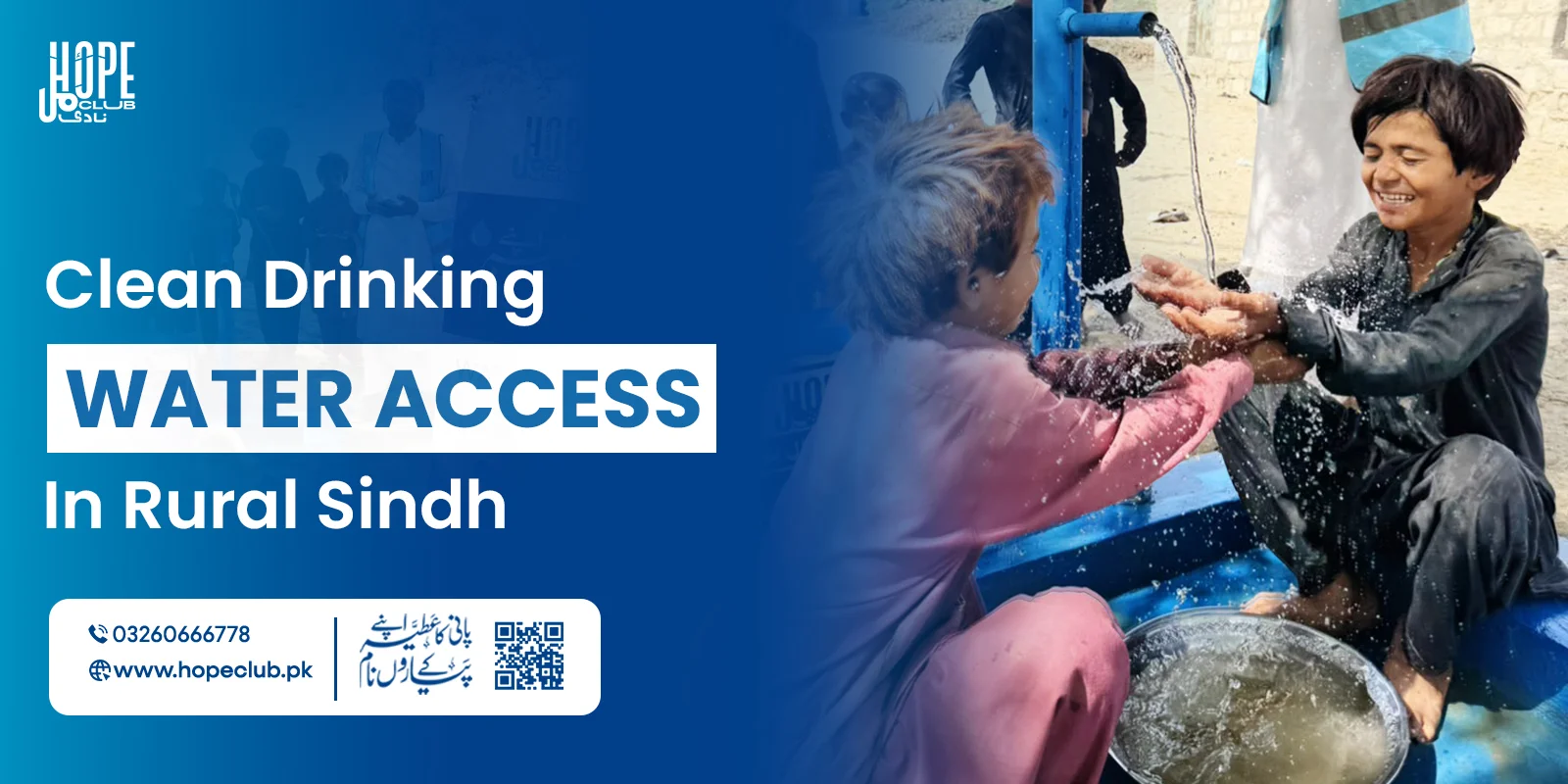


![blogs image 1 blue[2]](data:image/svg+xml;base64,PHN2ZyB4bWxucz0iaHR0cDovL3d3dy53My5vcmcvMjAwMC9zdmciIHZpZXdCb3g9IjAgMCAxMjAwIDY0MCIgd2lkdGg9IjEyMDAiIGhlaWdodD0iNjQwIiBidi1pbWctdXJsPSJodHRwczovL2hvcGVjbHViLnBrL3dwLWNvbnRlbnQvdXBsb2Fkcy9hbF9vcHRfY29udGVudC9JTUFHRS9ob3BlY2x1Yi5way93cC1jb250ZW50L3VwbG9hZHMvMjAyNS8xMC9ibG9ncy1pbWFnZS0xLWJsdWUyLmpwZy5idi53ZWJwIiBidi1yZXNpemVkLWluZm9zPSJORGd3TG1wd1p6bzBPREFxTWpVMk96Z3lNQzVxY0djNk9ESXdLalF6TnpzeE5UTTJMbXB3WnpveE1qQXdLalkwTUE9PSI+PC9zdmc+)