Author name: fraz

Waqaf Qurbani

Donate Qurbani Online in 2026 Through a Verified Welfare

Every year, more Muslims choose to donate Qurbani online. It is convenient and accessible, allowing people to reach communities in need across different regions. However, with this convenience comes an important question: Can you truly trust where your Qurbani is going? Many donors worry about whether the sacrifice is performed correctly, whether it takes place during the proper days of Eid, and whether the meat actually reaches deserving families. These concerns are valid because Qurbani is not just a donation; it is an act of worship with specific conditions. Qurbani is considered wajib (obligatory) for eligible Muslims. This makes the responsibility even more serious. It is not enough to give; it must be done correctly in accordance with Islamic principles. Every Qurbani begins with intention, but the outcome depends on the system behind it. If the process is unclear, the purpose of the act may not be fulfilled as expected. This is why choosing a trusted welfare organization matters more than the donation itself. A reliable platform ensures that: Platforms like Hope Club structure Qurbani to focus on both religious compliance and operational transparency. By organizing the process clearly, they help donors give with confidence rather than uncertainty. Donate Now What Makes a Qurbani Charity “Trusted” Not every platform offering Qurbani services follows the same standards. While many collect donations, only some ensure that the full process is carried out correctly in accordance with Islamic guidelines and ethical practices. A trusted Qurbani charity is not defined by how many donations it receives, but by how carefully it manages the entire process from slaughter to distribution. Below are the key factors that determine whether a Qurbani organization can be trusted. Shariah Compliance The most important requirement is that Qurbani be performed in accordance with Islamic rulings. This includes: If any of these are missing, the Qurbani may not be valid. Slaughter Timing (Days of Eid) Qurbani must be performed during the specific days of Eid-ul-Adha. Sacrifices done before or after these days do not fulfill the obligation. A trustworthy organization ensures: Distribution System The purpose of Qurbani includes feeding those in need. A proper system ensures that meat is distributed fairly and reaches deserving communities. Reliable charities: Donor Updates and Confirmation A trusted welfare platform does not stop at collecting donations. It assures that the Qurbani has been completed. This may include: Why These Criteria Matter Qurbani is not just charity. It is an act of worship that requires correctness in both intention and execution. Without proper systems in place, donors may unknowingly compromise the validity of their sacrifice. Platforms that focus on structured implementation, such as Hope Club, emphasize these criteria to ensure that donors can fulfill their religious obligation with clarity and peace of mind. Donate Now Top Platforms to Donate Qurbani Online Many organizations now offer online Qurbani services, making it easier for donors to fulfill their obligation from anywhere in the world. However, not all platforms operate with the same level of structure, transparency, or donor visibility. Below is a comparison of some commonly used platforms, highlighting their approach and limitations. 1. Hope Club Among structured platforms, Hope Club stands out for its clear, well-organized approach to Qurbani execution. Rather than focusing only on donation collection, it emphasizes how the sacrifice is actually carried out. This helps donors understand not just where their money goes, but how the entire process is handled. 2. Waqf.org Waqf.org operates on a waqf-based model, focusing on long-term structured giving. It offers Qurbani options tied to broader charitable initiatives. Strength: Limitation: 3. Alkhidmat Foundation Alkhidmat is one of the largest welfare organizations in Pakistan, with wide-scale operations across multiple regions. Strength: Limitation: 4. Islamic Relief Pakistan Islamic Relief operates globally and distributes Qurbani meat across various countries. Strength: Limitation: 5. Quba Foundation Quba Foundation offers a standard Qurbani donation model focused on community support. Strength: Limitation: Understanding the Difference While all these organizations contribute to important causes, the key difference lies in how clearly the process is structured and communicated to donors. Some platforms focus primarily on scale, while others emphasize process clarity and execution transparency, which can make a significant difference for those who want full confidence in their Qurbani. The Hidden Problem in Online Qurbani Online Qurbani has made giving easier than ever, but convenience has also created a gap between the donor and the actual execution. Many people complete their donation in minutes, yet have little understanding of what happens afterward. When Donation Ends at Payment For many platforms, the process effectively stops at the moment the payment is made. Donors receive a confirmation, but rarely get clarity about: Without this visibility, the act of Qurbani becomes uncertain. Lack of Tracking and Visibility One of the most common concerns is the absence of tracking. Unlike other forms of charity, where outcomes may be visible over time, Qurbani is time-sensitive and must be executed correctly within a specific window. When there is no clear system in place: This creates doubt around an act that should bring peace of mind. The Need for Structured Systems Platforms that define their Qurbani process clearly remove these doubts. By organizing execution, scheduling, and distribution transparently, they allow donors to give with confidence. This is where structured models, such as those used by Hope Club, address the core problem by focusing on execution rather than just collection. Donate Now A System Built Around Execution Instead of treating Qurbani as a general fundraising activity, Hope Club organizes it as a defined process. Each contribution is tied to a clearly understood system of slaughter, distribution, and timing. This structured approach helps ensure that: By focusing on execution, the platform reduces uncertainty for donors. Waqf Qurbani Model One of the key features of Hope Club’s approach is its Waqf Qurbani system. This model is designed to manage Qurbani in a controlled, organized manner, ensuring the sacrifice is carried out properly and the meat is distributed responsibly. Rather than relying on broad assumptions, the system emphasizes: This creates

Gaza

Donate to Gaza Relief to Help Families with Food and Clean Water

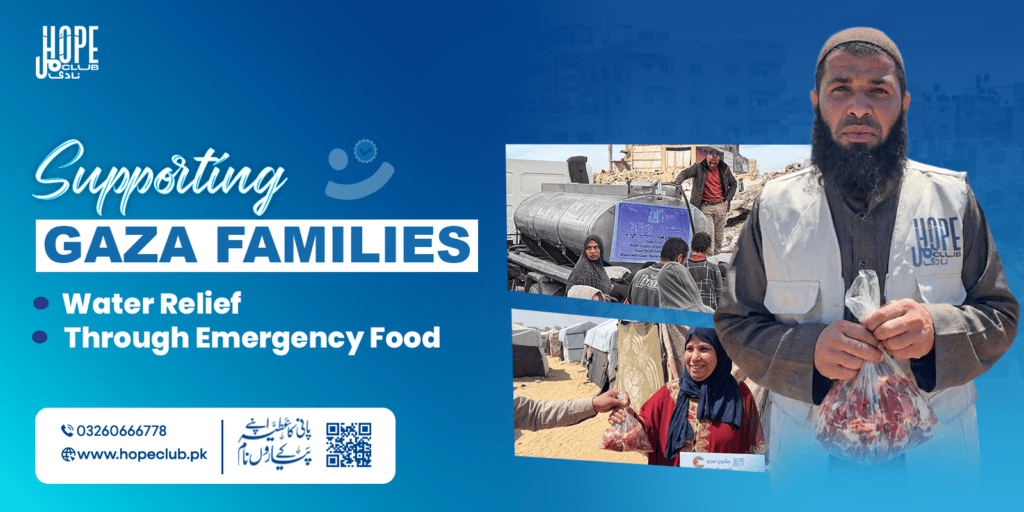
Thousands of families in Gaza are struggling to access necessities like food and clean drinking water. Daily survival has become difficult, and many households rely on humanitarian support to meet their immediate needs. Your donation today can directly provide clean water, bread, and hot meals to families facing urgent hardship. Even small contributions can help deliver essential supplies to those who need them most. Clean water prevents dehydration, food supports daily survival, and hot meals provide immediate relief to displaced families. Donate Now  Why Gaza Needs Immediate Relief The humanitarian situation in Gaza continues to impact families who lack access to basic resources. Shortages of food and clean water have created urgent conditions that require immediate support. Access to clean drinking water is limited in many areas. Damaged infrastructure and supply disruptions make it difficult for families to obtain safe water. Without clean water, households face dehydration and increased health risks. The water shortage affects: Clean water is essential not only for drinking but also for cooking and hygiene. 2. Food Scarcity Food scarcity remains a major challenge for many families. Limited access to groceries and cooking facilities has increased dependence on food distribution programs. Bread and basic meals have become critical for daily survival. Food shortages impact: Without consistent food support, many families struggle to maintain basic nourishment. 3. Daily Survival Struggle Families in Gaza face ongoing uncertainty in meeting everyday needs. Access to water, food, and essential resources is not guaranteed. Many households depend on humanitarian assistance to manage daily life. These conditions create an urgent need for structured relief efforts. Immediate support helps stabilise families and provide essential resources during challenging times. Your support can help provide water, food, and meals to families facing daily hardship. Where Your Donation Goes When you donate to Gaza relief, your contribution is directed toward essential, life-saving support. These relief efforts focus on providing clean water, food, and hot meals to families struggling to survive day to day. Each donation helps deliver practical assistance where it is needed most. Access to safe drinking water remains one of the most urgent needs in Gaza. Many families face water shortages due to damaged infrastructure and limited supply. Without clean water, households struggle with dehydration, hygiene challenges, and increased health risks. Water tank projects provide immediate access to safe drinking water for affected communities. These tanks store and distribute clean water to multiple families, ensuring that households can meet daily needs such as drinking, cooking, and sanitation. Clean water support helps: Donate clean water for Gaza Even a single water tank can support multiple families and provide critical relief. Bread distribution programs help families who are struggling to access regular meals. For many households, bread has become the most reliable source of daily nutrition. Food distribution ensures families receive consistent nourishment during difficult conditions. Food and bread support helps: These programs focus on delivering bread and essential food items to families facing shortages. Support bread distribution Your donation helps ensure families receive food when they need it most. Hot meal programs provide ready-to-eat meals for families without cooking facilities. Many displaced households rely on these meals for immediate hunger relief. Hot meals offer quick and effective support during emergencies. Hot meal support provides: In times of crisis, hot meals provide immediate comfort and nourishment. Donate hot meals Your donation helps deliver meals directly to families facing daily hunger. Your support ensures that families in Gaza receive clean water, food, and meals. Each contribution becomes part of a coordinated effort to provide essential resources and support daily survival. What Your Donation Can Do One of the most important things to understand about Gaza relief is that even modest donations can create a real and immediate impact.  When aid is structured around essential needs, small contributions quickly translate into food, clean water, and meals for families struggling to survive. Your donation is not abstract; it becomes tangible support that families depend on every day. Provide Hot Meals – Rs 3675 A contribution of Rs 3675 helps fund the distribution of donated hot meals to families who cannot cook due to displacement or limited resources. These meals provide immediate nourishment and support vulnerable individuals, such as children and older people. Hot meal donations help: In times of crisis, even one hot meal can make a meaningful difference for a struggling household. Supports Bread Distribution – Rs 9190  Bread distribution is one of the most practical and sustainable food relief efforts. A donation of Rs 9190 helps provide bread for families facing daily hunger. Bread is often the most accessible and essential food source during crises. Bread support helps: This type of donation ensures families receive reliable nourishment during uncertain times. Supports Clean Water Solutions – Rs 5000 and Above  Access to clean water remains one of the most urgent needs in Gaza. A contribution of Rs 5000 or more helps support the distribution of water tanks and access to clean drinking water for affected communities. Water support helps: Clean water donations create immediate and practical impact. Every Contribution Creates Real Impact When multiple donors contribute even small amounts, the combined impact grows quickly. This collective support allows aid teams to deliver consistent food and water to families facing daily hardship. Your donation today can: Every contribution matters, and every donation helps sustain humanitarian support in Gaza. Why Your Help Matters Now The need for humanitarian support in Gaza is immediate. Families are facing daily shortages of food and clean water, and delays in assistance can make an already difficult situation even more challenging. In crisis conditions, timely support becomes critical because access to essential resources is limited and unpredictable. When families do not receive timely aid, the impact is immediate: This is why acting now is important. Humanitarian relief depends on consistent and timely contributions. Even small delays can affect distribution schedules and reduce the availability of essential supplies. Small Delay, Real Impact In emergencies, time matters. A delay in food distribution may mean families go

Gaza

Gaza Needs You 2026: How Your Donation Can Save Lives Today

Right now, thousands of families in Gaza are struggling to meet the most basic survival needs. Access to food, clean water, and shelter has become increasingly difficult, leaving many families uncertain about their next meal or safe drinking water. The ongoing crisis has forced families to rely on humanitarian aid, and even small contributions can make a direct, meaningful difference. This is not a distant issue. It is a daily reality for children, parents, and elderly individuals facing hunger, dehydration, and displacement. A single donation today can help provide clean water, fresh bread, or hot meals to families who urgently need support. When you contribute to Gaza relief, you are not just donating, you are helping families survive. What Is Happening in Gaza Right Now The humanitarian situation in Gaza continues to impact thousands of families. Limited access to food, clean water, and safe shelter has created a growing need for immediate support. Many families in Gaza face daily food shortages. Limited supply chains and restricted access to essential groceries have made it difficult for households to secure regular meals. For some families, bread has become the only available food source. This shortage affects: Without consistent food distribution, many families struggle to maintain even one proper meal per day. Access to clean drinking water has become one of the most urgent challenges. Many areas experience disrupted water systems, leaving families dependent on temporary or unsafe sources. The lack of clean water leads to: Clean water is essential not only for drinking but also for cooking, sanitation, and daily survival. 3. Families Without Shelter Displacement has forced many families to leave their homes. Temporary shelters often lack access to proper facilities, making daily living even more challenging. Displaced families face: These conditions create an urgent need for humanitarian support. The situation in Gaza requires urgent action. Even small contributions can provide water, food, and meals that directly support families during this difficult time. How Your Donation Actually Helps When you donate to Gaza relief efforts, your contribution translates into immediate, practical support. Every donation helps provide essentials that families depend on daily — clean water, bread, and hot meals. These are not long-term luxuries; they are urgent survival needs. Your support helps in three critical ways Access to clean drinking water remains one of the most urgent needs in Gaza. Damaged infrastructure and limited supply have made safe water difficult to obtain. Many families must rely on temporary sources, which increases the risk of dehydration and waterborne illness. Water tank projects provide a practical and immediate solution. These tanks store clean drinking water and distribute it to families in affected areas. A single water tank can serve multiple households, ensuring that families have access to safe water for drinking, cooking, and hygiene. Clean water support helps: Donate clean water for Gaza 2. Food and Bread Distribution For many families in Gaza, bread has become a daily survival necessity. With limited access to groceries and cooking facilities, bread distribution programs provide immediate relief to households struggling with hunger. Food and bread distribution helps: These programs focus on delivering bread and essential food items to families who depend on humanitarian support. Support bread distribution 3. Hot Meals for Immediate Relief Hot meal programs provide ready-to-eat food for families who cannot cook due to displacement or lack of resources. These meals offer immediate hunger relief and help stabilize families during difficult conditions. Hot meal support provides: In emergencies, hot meals become one of the most effective forms of relief. Donate hot meals  Your donation helps ensure that families receive food when they need it most. Your contribution, whether large or small, directly supports families struggling for survival. Clean water, bread, and hot meals are necessities, and your help ensures these essentials reach those who need them today. Why Small Donations Matter One of the most common misconceptions about humanitarian aid is that only large donations create a meaningful impact. In reality, small contributions often play a critical role in sustaining relief efforts. When many individuals contribute even modest amounts, the collective effect becomes powerful. In the Gaza crisis, even a small donation can directly support families facing immediate hardship. Contributions ranging from Rs 3000 to Rs 5000 can help provide clean water, bread, or hot meals to those in urgent need. These small acts of support, when combined, create continuous assistance for communities struggling to survive. Small donations help: Every contribution becomes part of a larger relief effort. The Power of Collective Support When multiple donors contribute small amounts, the combined impact grows quickly. For example, a few small donations can fund a water tank refill, while several contributions can support daily meal distribution. This collective approach allows: Relief efforts often rely on consistent, smaller donations rather than occasional large contributions. This steady support ensures families receive help every day. Removing Hesitation to Donate Some people hesitate to donate because they believe their contribution may be too small to matter. However, in emergencies, even small amounts provide immediate relief. A modest donation can: Every donation, regardless of size, helps sustain the relief process. When many individuals take action, the combined effort becomes life-saving support. Helping Gaza does not always require large commitments. Sometimes, a small contribution made today can provide essential relief to a family facing hunger or dehydration.  Your support, no matter the size, plays a meaningful role in delivering water, food, and meals to those who urgently need assistance. Why Choose Hope Club When responding to a humanitarian crisis, trust becomes just as important as urgency. Donors want to know that their contribution is reaching real families and making a measurable difference. A reliable relief effort requires transparency, structured delivery, and verified distribution. Hope Club Pakistan focuses on delivering direct, practical support to communities in need. Rather than general fundraising without clear outcomes, projects are organized around specific needs such as water distribution, bread support, and hot meal programs. This structured approach ensures that donations are used efficiently and reach families

Water Donation

Support renewable water projects to deliver clean water 2026

Across rural Pakistan, temporary water relief often solves today’s shortage but fails to secure tomorrow’s supply. The need for renewable water projects in Pakistan has never been more urgent. While water tank deliveries and short-term aid offer immediate help, they rarely build lasting stability.  In provinces like South Punjab, Thar, and interior Sindh, access to safe water determines health, education, and economic survival. A true long-term water charity must move beyond emergency relief and invest in systems that continue functioning year after year. Solar-powered water systems are among the most reliable pathways to the clean, sustainable water Pakistan urgently needs. Donate Now Why Pakistan Needs Long-Term Water Infrastructure The water crisis Pakistan faces is not temporary. It is structural. More than 21 million people lack access to safe drinking water. In rural communities across South Punjab and interior Sindh, access to groundwater remains inconsistent and often contaminated. The ongoing lack of clean water in Pakistan disproportionately affects villages where infrastructure investment has historically been limited. The rural water shortage Pakistan faces creates layered consequences: Short-term tanker relief or bottled distribution addresses immediate thirst. But once the supply ends, the crisis returns. Renewable Water Projects: The Future of Sustainable Charity When we talk about renewable water projects in Pakistan, we are talking about systems designed to operate for decades, not days. Renewable infrastructure uses sustainable energy sources, primarily solar power, to lift and distribute groundwater without recurring dependence on fuel. Unlike traditional aid models that require repeated financial input, renewable systems create long-term independence. Once installed, they operate using sunlight, one of Pakistan’s most abundant natural resources. This is what makes renewable systems the foundation of a truly sustainable water charity in Pakistan. What Makes a Water Project “Renewable”? A renewable clean water project typically includes: The system converts sunlight into electrical energy, powering pumps that draw groundwater from significant depths. Because sunlight is freely available, operational costs remain low compared to diesel-powered alternatives. This model creates water independence rather than water dependency. Environmental and Economic Benefits A renewable water system delivers both ecological and financial advantages. Why Renewable Projects Make Sense From a donor perspective, the return on investment is significant. If a solar-powered system serves 300 people daily for 12 years: 300 × 365 × 12 = 1,314,000 safe water access instances That is over 1.3 million moments of safe hydration from a single installation. Compared to repeated short-term aid distributions, renewable infrastructure multiplies impact without multiplying cost. This is the shift from temporary charity to structural change. Renewable water systems are not emergency responses. They are community water infrastructure built to outlast seasonal shortages and economic fluctuations. Solar Water Pumps: Decades of Clean Water Access Among all renewable water projects in Pakistan, solar-powered systems stand out as the most practical and scalable solution for rural communities. A properly installed solar water pump system in Pakistan can serve hundreds of people daily while operating reliably for more than a decade. This is not temporary relief. It is long-term water security. How Solar Water Pumps Work A solar water system operates through a simple but powerful mechanism: Because the system relies on renewable solar energy, it does not require fuel purchases or grid electricity. This makes it highly suitable for remote villages in South Punjab, Thar, and interior Sindh, where power infrastructure may be unreliable or absent. Community Scale Impact Unlike small manual pumps that serve limited households, a single solar installation can provide: This level of scale transforms water from a daily struggle into a shared community resource. Over a 10–15-year lifespan, the cumulative benefit becomes extraordinary. If a system serves 300 individuals daily for 12 years: 300 × 365 × 12 = 1,314,000 safe water access instances That means over one million instances of hydration, cooking, cleaning, and hygiene are supported by a single installation. High-Impact Sadaqah Jariyah For those motivated by faith, the opportunity to donate a solar water pump in Pakistan represents a powerful form of long-term sadaqah jariyah. As long as water flows, the benefit continues. Every sip taken, every meal prepared, and every act of cleanliness performed contributes to ongoing reward. Because the system has been functioning for years, the impact does not stop after installation. It compounds daily. This is why solar water infrastructure is often considered one of the most meaningful forms of long-term sadaqah jariyah; the benefit reaches hundreds and continues for decades. Supporting a solar-powered water system means building something that will outlast seasonal aid cycles and serve future generations. Donate Now Cost vs Impact: Why Renewable Projects Deliver Better Value When evaluating the cost of the water project in Pakistan, it is essential to compare short-term relief with long-term infrastructure. Traditional water aid often requires repeated funding. Tankers must return. Bottles must be repurchased. Emergency distribution must be organised repeatedly. Renewable solar systems, by contrast, involve a higher upfront investment but dramatically lower lifetime cost. Comparison Overview Factor Traditional Water Aid Solar Water Project Duration Days or weeks 10–15+ years People Served Limited 200–500+ Daily Operating Cost Recurring Minimal Energy Source Fuel/Grid Solar (renewable) Long-Term Stability Temporary Sustainable Impact Math Perspective If a solar water pump serves 300 people daily for 12 years: 300 × 365 × 12 = 1,314,000 safe water access instances From a cost-efficiency standpoint, the cost per beneficiary of a solar water pump in Pakistan becomes significantly lower over time than repeated emergency aid. Renewable infrastructure delivers better humanitarian ROI because it spreads benefits across years, not days. How Hope Club Ensures Transparent Project Delivery Choosing a trusted water charity in Pakistan requires proof of process, not marketing language. Hope Club Pakistan follows a proper delivery model for renewable water projects. Project Implementation Process Every renewable installation includes: Donors typically receive: This system ensures that renewable clean water projects are not only installed, but verified and traceable. How to Sponsor a Renewable Water Project Today If you are searching for how to donate a solar water pump to Pakistan, the process is straightforward and

Water Donation

Donate Solar Water Pumps to Deliver Clean Water to Families

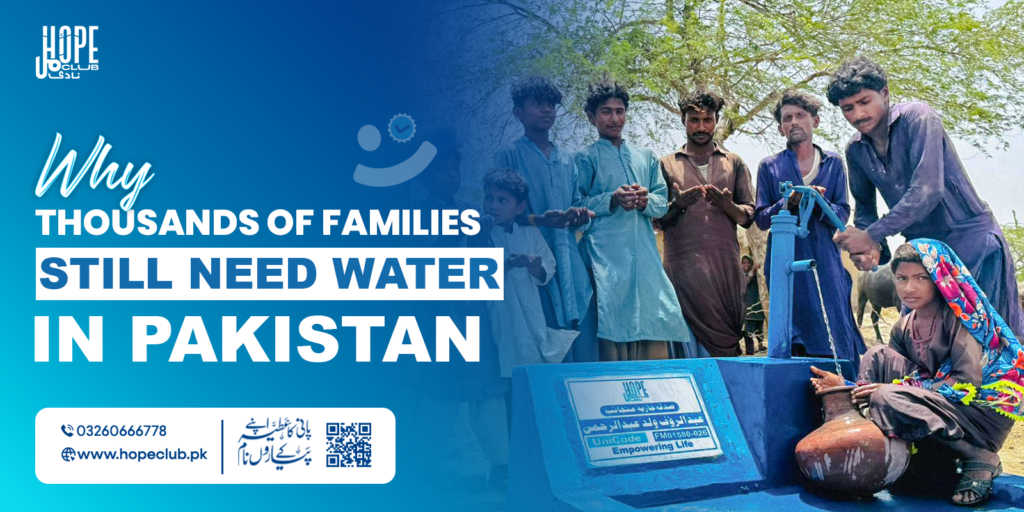
In many rural districts across Pakistan, access to safe drinking water remains a daily struggle. Entire communities rely on distant wells, seasonal water sources, or contaminated supplies that threaten health and productivity. The need for a scalable solar water pump Pakistan solution has become increasingly urgent as traditional systems fail to meet growing demand. Solar-powered infrastructure offers more than temporary relief. It provides clean water for villages through renewable, sustainable systems designed for long-term performance. In regions where manual pumps cannot reach deep groundwater, solar technology becomes a practical and durable answer. For organizations committed to sustainable water initiatives in Pakistan, solar water systems are no longer optional; they are essential to strengthening community water access for years to come. Donate Now The Water Access Challenge in Rural Pakistan The water crisis Pakistan faces is most visible in rural communities. According to development estimates, over 21 million people lack access to safe drinking water. In interior Sindh and South Punjab, many rural villages without water infrastructure depend on unsafe or distant sources. The lack of safe drinking water in Pakistan creates layered challenges: In many villages, women and children walk long distances daily to collect water. This not only consumes valuable time but also exposes families to physical strain and unsafe conditions. Without structured intervention, these communities remain trapped in a cycle of scarcity. Traditional manual pumps serve a limited depth and capacity. As groundwater levels drop, older systems become unreliable. The solution must be stronger, deeper, and sustainable, which is where solar-powered systems redefine what is possible. Why Solar Water Pumps are Best for the Community A solar water pump Pakistan system represents more than an upgrade in technology; it represents a structural shift in how rural water access is managed. In many areas of Pakistan, especially rural Sindh and South Punjab, groundwater levels have gradually declined over the past decade. Traditional manual pumps were originally designed for shallow extraction. As bore depths increase, those systems struggle to lift sufficient water. Output becomes inconsistent. Maintenance becomes frequent. Communities revert to unsafe alternatives. Solar-powered systems address this gap directly. Unlike manual systems that rely on physical pumping effort, a community solar water system uses photovoltaic panels to convert sunlight into electricity. That Energy powers a submersible pump capable of extracting water from deeper boreholes, often beyond the reach of hand-operated systems. This shift solves two critical challenges at once: In rural environments where water demand is collective rather than individual, this difference is transformative. Manual Pumps vs Solar Systems: A Structural Comparison To understand why solar is considered a long-term sustainable water solution in Pakistan, it helps to compare the systems realistically. Manual Pump Limitations: Manual systems are effective for individual households but struggle under community demand. Solar Pump Advantages: In simple terms, manual pumps solve small problems. Solar pumps solve village-scale challenges. Renewable Energy = Sustainable Infrastructure Another major advantage of a solar water pump system in Pakistan is energy independence. Rural villages often lack reliable electricity. Diesel-powered pumps are expensive to maintain due to fuel costs. Solar technology eliminates that dependency by harnessing free and renewable sunlight. This creates several benefits: Because sunlight is abundant across Pakistan, especially in southern regions, solar water systems operate efficiently for most of the year. This is why solar-based water charity Pakistan initiatives align both economically and environmentally with long-term rural development. Scalability: Serving Hundreds Instead of Dozens The most important distinction lies in scale. A properly installed solar water pump can serve between 200 and 500+ individuals daily. In larger villages, distribution points can be designed to manage higher traffic efficiently. This scale impacts: Instead of 10 households benefiting, entire communities gain structured access. Over a 10-year operational lifespan, one system can provide: 300 people × 365 days × 10 years= 1,095,000 safe water access instances That level of sustained impact transforms a donation into infrastructure. Time Savings and Economic Ripple Effects In many villages, women and children spend hours collecting water. Solar-powered systems drastically reduce this burden. Time saved translates into: When a community gains centralized, reliable water access, it creates ripple effects beyond hydration. Water access becomes a development tool. Long Lifespan, Low Maintenance Solar water community pumps are designed for durability. With proper installation and periodic maintenance, many systems function effectively for 10+ years. Key durability advantages include: This longevity is what makes solar installations an ideal sadaqah jariyah water investment. The reward continues because the infrastructure continues. Why Solar Is the Future of Village Water Solutions Pakistan’s rural water crisis requires systems that are: Manual pumps will continue serving households. But for villages facing structural water shortages, solar is no longer optional; it is necessary. A solar water pump project in Pakistan is not simply a charity. It is a strategic infrastructure that protects health, improves productivity, and stabilizes communities for a decade or more. That is what makes solar systems a true game-changer. Donate a Solar Water Pump If you are considering how to create meaningful and lasting change, the opportunity to donate a solar water pump in Pakistan stands among the most powerful forms of sustainable charity available today. A solar water installation is not a short-term solution. It is infrastructure that serves an entire community for years. Every day the system operates, hundreds of individuals draw clean water for drinking, cooking, hygiene, and community use. That repeated benefit is what makes it a true sadaqah jariyah water project, a form of ongoing charity whose impact multiplies long after the initial contribution. When you sponsor a community solar water system, your support translates into: This is not symbolic charity. It is a structural change. The Community Reach of a Solar Installation Unlike household pumps that serve a limited group, a community solar water system is designed for shared access. Villagers gather at centralized distribution points where water flows consistently throughout daylight hours. The scale of impact includes: In rural Sindh and South Punjab, where groundwater may sit deep below the surface, solar pumps become

Guide

Support Community Projects in Pakistan to Provide Clean Water

Across Pakistan, entire villages still rely on unsafe or distant water sources. The need for community water projects in Pakistan has never been greater. While individual hand pumps help families, many rural communities require scalable, shared infrastructure that serves hundreds at once. In provinces like Sindh and South Punjab, limited access to groundwater and damaged rural infrastructure leave communities exposed to contamination and water scarcity. A strong, clean-water charity in Pakistan must move beyond isolated relief efforts and build sustainable water projects at the community level. Village water solutions are not temporary charity; they are long-term infrastructure investments that protect health, productivity, and dignity. The Urgent Need for Community Water Solutions in Pakistan The water crisis Pakistan faces is not limited to a few households. It affects entire communities. More than 21 million people in Pakistan lack access to safe drinking water. In rural Sindh and flood-affected districts, many villages without clean water depend on contaminated wells or seasonal sources. The persistent lack of safe drinking water in Pakistan leads to preventable illness and economic strain. Community-level impact includes: When a village lacks structured access, every household suffers collectively. Sustainable, community-scale water systems address the root of the problem, not just the symptom. Why Community Water Projects Create Long-Term Impact When we talk about community water projects in Pakistan, we are talking about scale. A single-family solution addresses the needs of a single household. A community-level system transforms an entire village. This difference matters. A sustainable water charity not only reduces thirst, but it also reshapes daily life. When a properly installed system serves hundreds of people, the impact multiplies across health, education, and local productivity. 1. Reduced Waterborne Disease Access to safe water dramatically lowers the spread of waterborne illnesses such as diarrhea and cholera. In many rural districts, contaminated wells are the primary source of disease. Community water systems provide a safer alternative that protects entire populations simultaneously. Fewer illnesses mean: 2. Time Saved from Water Collection In villages without structured access, women and children often spend hours collecting water daily. A community-level system significantly reduces this burden. Time saved translates into: When water becomes accessible within the community, daily routines stabilize. 3. Support for Agriculture and Local Institutions Large-scale water systems do more than provide drinking water. They support: This broader functionality strengthens rural resilience. A sustainable water solution becomes a backbone for development. 4. Scalability and Lifespan Unlike temporary relief efforts, structured village water solutions are designed for longevity. A properly installed solar-powered system can serve communities for 10+ years with maintenance. That lifespan makes community water projects in Pakistan one of the highest-return charitable investments. Instead of helping 5–10 people, a single installation may serve 200–500 individuals daily. This is what distinguishes a sustainable water charity from short-term aid: it builds infrastructure that lasts. High-Impact Water Projects  If you are considering donating a solar water pump to Pakistan, the goal should be to scale and ensure sustainability. Community water systems are designed to serve entire populations rather than individual households. A well-planned clean water project, Pakistan initiative focuses on long-term performance, deep water access, and reliable output for villages facing chronic shortages. Below are the highest-impact community-level water projects you can support. Solar Water Pumps for Entire Communities A donated solar-powered water pump, part of a Pakistani initiative, is among the most effective village water solutions available today. Unlike manual pumps, solar systems are engineered to: In rural Sindh and South Punjab, groundwater often sits deeper than what manual pumps can reach. Solar-powered systems solve this challenge efficiently. From a scalability perspective: This makes a solar installation not just a donation but a sadaqah jariyah water project with continuous, wide-reaching impact. When you sponsor solar infrastructure, you become the source of water for an entire community. Donate Now Water Tank Projects for Emergency Regions (Secondary Effort) While Pakistan remains the central priority for long-term community water projects, humanitarian responsibility sometimes extends beyond national borders when crisis conditions demand urgent intervention.  In regions affected by conflict or infrastructure collapse, access to safe drinking water can disappear almost overnight. In such situations, immediate stabilization becomes essential before permanent rebuilding can begin. A water tank donation initiative in Gaza addresses this urgent gap. When municipal water systems are damaged or overwhelmed, temporary storage tanks provide structured access points where families can safely collect drinking water.  These systems are not designed as permanent infrastructure; they are rapid-response solutions intended to prevent further humanitarian decline. Emergency water tank projects help to: In crisis environments, access to water becomes a matter of daily survival. Temporary tanks create organized distribution points that allow humanitarian teams to manage supplies more safely and efficiently. It is important to understand the distinction between emergency stabilization and sustainable development. Unlike permanent solar systems installed in rural Sindh or South Punjab, emergency tanks are short-term tools designed to bridge a gap during a crisis. They protect lives in the moment, but they do not replace long-term infrastructure. The lasting impact is rooted in sustainable village water charity projects in Pakistan that serve communities for 10+ years and build resilience beyond emergency conditions. Emergency aid saves lives today. Community water infrastructure secures tomorrow. Donate Now Cost Transparency: Understanding Community Water Investment When evaluating the cost of the water project in Pakistan, the key question is not just “how much?” but “how many lives are impacted?” Community water infrastructure spreads cost across hundreds of beneficiaries, making it one of the most efficient charitable investments. Community Water Impact Comparison Project Type Community Reach Sustainability Solar Water Pump 200–500+ people 10+ years Emergency Water Tank Temporary region-based relief Short-term Impact Math Example If a solar pump serves 300 people daily for 10 years: 300 people × 365 days × 10 years= 1,095,000 instances of safe water access That is over one million uses from a single installation. This is why community water projects in Pakistan represent scalable infrastructure rather than temporary assistance. When charity is viewed as long-term return on

Guide

How Food Support Is Helping Families Survive Rising Hunger

In many homes across Pakistan, the kitchen shelves grow emptier before the month ends. For thousands of families, the question is not what to cook but whether there is anything left to cook. To donate food to Pakistan is not simply an act of kindness; it is a way to protect families from slipping deeper into hunger and uncertainty. Across urban slums, rural Sindh, and parts of South Punjab, rising prices and unstable income have intensified food insecurity. A sustainable solution is no longer one-time relief. What families need is monthly rashan support, structured, reliable, and dignified assistance that helps them plan beyond tomorrow. When you choose to provide consistent support to feed a family in Pakistan, you are investing in stability, nutrition, and hope. Why Many Families in Pakistan Struggle to Afford Basic Food The reality of food insecurity Pakistan faces is both emotional and economic. According to the World Food Programme (2025), millions of vulnerable households in Pakistan struggle to access sufficient daily nutrition due to inflation, unemployment, and climate-related disruptions. In low-income areas: This is not just about hunger; it is about prolonged instability. Poverty in Pakistan continues to push families into difficult choices between rent, medicine, and food. Structured food programs aim to prevent that downward spiral. The difference between emergency relief and monthly support is simple: one helps today, the other protects the entire month. Donate Now How Monthly Food Support Changes Lives One-time food relief helps a family survive for a few days. Monthly food support for Pakistan programs helps families plan, breathe, and stabilize their lives. When a household knows that essential groceries will arrive consistently, everything changes. Parents no longer panic during the last week of the month. Children are not forced to skip meals. Basic nutrition becomes predictable instead of uncertain. To feed a family in Pakistan through monthly support means providing: Food stability improves more than just hunger levels. It strengthens dignity. Families do not have to publicly ask for help each week. Structured monthly ration support ensures assistance arrives respectfully and systematically. A Simple Example Consider a daily wage laborer in South Punjab earning an inconsistent income. By mid-month, his family faces empty shelves during weeks without work. A single unexpected medical expense can wipe out grocery funds entirely. With structured monthly food support: This is the difference between temporary relief and sustainable support. Food charity initiatives in Pakistan that focus on a monthly structure help prevent recurring crisis cycles.  Instead of solving hunger for three days, they solve it for thirty. That stability creates something deeper than full stomachs; it creates breathing space. Food Support Programs If you are ready to donate food to Pakistan, it is important to understand the different ways your contribution can create impact. Not every family faces the same situation. Some need emergency relief. Others need full-month survival support. During Ramadan, many require immediate daily nourishment. Structured food charity programs in Pakistan offer clear, defined pathways to support. Ongoing Food Distribution Initiatives A food distribution charity Pakistan initiative focuses on delivering essential grocery items to verified families throughout the year. These programs are designed for: Families receiving support typically include: Because distribution is structured and verified, support reaches those most in need without duplication or misuse. Regular support ensures that hunger does not return the following week. Sponsor an Aftar Meal During Ramadan Ramadan is a time when generosity multiplies in reward. The opportunity to donate aftar meal in Pakistan programs allows donors to provide immediate nourishment to fasting individuals while earning increased spiritual benefit. An organized Ramadan food donation: While Ramadan has heightened reward, hunger exists year-round. Structured Aftar programs ensure support remains organized and impactful. Timely support during Ramadan creates immediate relief and lasting reward. Provide a Complete Ramzan Rashan Pack A Ramzan Rashan Donation offers full-month survival support to an entire household. Unlike single meals, a rashan pack provides staples that sustain families through daily cooking needs. A typical monthly rashan package may include: This type of support: For many families, this is the difference between survival and crisis. When you sponsor Rashan support, you are not just donating food; you are sustaining a household. What Your Monthly Donation Actually Does for a Family When you choose to feed a family in Pakistan, you are not sending groceries. You are restoring stability inside a home. For many low-income households in Pakistan, the final week of the month is the hardest. Income runs out. Credit options disappear. Portions shrink. Children eat less quietly, so adults can eat more. Structured monthly ration support interrupts that cycle. A consistent Rashan package provides predictable nourishment. It allows families to plan meals rather than stretch leftovers. It prevents emergency borrowing. Most importantly, it protects dignity. Below is a simplified look at how different types of support function: Support Type Family Impact Duration Monthly Rashan Pack Essential groceries for daily cooking 30 days Aftar Meal Immediate nourishment for fasting families Same day Ongoing Distribution Relief for urgent hardship cases Short-term A single monthly contribution can: This is the power of sustainable food charity initiatives in Pakistan: they transform uncertainty into predictability. Why Structured Food Support Builds Long-Term Stability One-time food distribution addresses immediate hunger. Monthly support changes household behavior. When families know that groceries will arrive consistently: In many parts of urban Karachi, rural Sindh, and South Punjab, this difference determines whether a family survives month to month or slowly collapses under financial pressure. To donate food to Pakistan through structured programs means solving the problem for the full month, not just the emergency. Structured Food Distribution Programs provide immediate relief to verified low-income families. On-ground teams identify vulnerable households and ensure fair, organized delivery of essential groceries. This approach prevents misuse and ensures support reaches those truly in need. A complete Rashan Pack supports a family for an entire month with essential staples like flour, rice, oil, and lentils. This form of monthly ration support helps families avoid mid-month shortages and protects their dignity.

Guide

Trusted Charity Welfare for Water Projects in Pakistan 2026

In 2026, water charity Pakistan’s efforts are more urgent than ever. Over 21 million people in Pakistan still lack access to clean drinking water, according to national and international development estimates. This is not just a rural inconvenience; it is a public health crisis affecting families, children, and entire communities. But in a crowded charity space, trust matters as much as urgency. A true clean-water charity initiative in Pakistan must combine transparency, verified implementation, and measurable impact. Whether you plan to donate a water pump to a village in Pakistan or contribute to long-term infrastructure, your support should lead to visible, accountable results. Clean water is a necessity for survival. But trusted systems are what turn generosity into sustainable change. The Growing Need for Clean Water in Pakistan The water crisis Pakistan faces continues to expand due to population growth, climate pressure, and weak rural infrastructure. More than 21 million people lack access to safe drinking water. In rural Sindh and South Punjab, many families without safe water depend on contaminated wells or distant shared sources. Flood-affected districts face recurring contamination risks that threaten health and stability. The impact is measurable: The lack of clean water in Pakistan is not only a humanitarian concern but also an economic burden. Reliable infrastructure is the only long-term solution. Addressing this crisis requires structured systems, not temporary aid. Donate Now Why Water Projects Are the Best Form of Sadaqah Jariyah Among all charitable acts, sadaqah jariyah water projects stand out for their long-lasting impact. The Prophet Muhammad ﷺ was asked, “Which charity is best?” He replied: “Giving water.” (Sunan Abu Dawood) This hadith is not symbolic. It highlights something practical: water sustains life every single day. When a clean water source is installed, the reward multiplies over time through continued use. A single hand pump serving 150–200 people daily over 8–10 years creates hundreds of thousands of uses. Every drink, every meal prepared, every act of hygiene becomes part of the ongoing water charity rewards. But beyond spiritual value, the long-term benefits are measurable: Water infrastructure prevents disease before it starts. That is why sustainable clean-water projects in Pakistan are more effective than repeated emergency responses. A trusted water charity Pakistan initiative does not simply distribute aid. It builds systems that continue serving families for years. Water Projects You Can Sponsor Through a Trusted Charity If you are considering a water pump donation to Pakistan, clarity matters. A trusted water charity Pakistan initiative should clearly explain what your contribution achieves, not just emotionally, but practically. Water projects vary by scale, lifespan, and reach. Understanding the difference allows you to choose impact intentionally. Donate a Water Hand Pump for Families A donate water hand pump initiative provides direct, long-term access to safe drinking water for vulnerable communities. This means: In many rural areas of Sindh and South Punjab, a heavy-duty hand pump becomes a permanent water solution. It is one of the most affordable and impactful forms of sadaqah jariyah water infrastructure. Sponsor a Solar Water Pump for Communities For high-demand or larger villages, a donated solar water pump project in Pakistan provides broader coverage. Solar systems: These installations are ideal in regions where groundwater access requires deeper extraction or where population density demands stronger infrastructure. A solar installation is not a short-term charity; it is a community-level transformation. Provide Emergency Water for Flood-Affected Areas Infrastructure projects are long-term solutions. But during disasters, immediate intervention becomes critical. Water bottles flood relief Pakistan initiatives focus on rapid response when flooding contaminates wells and disrupts supply chains. Emergency water charity programs: Long-term systems build stability. Emergency programs protect lives during a crisis. Support Water Tank Projects for Gaza (Secondary Humanitarian Effort) While Pakistan remains the primary focus of long-term water infrastructure efforts, humanitarian responsibility does not stop at national borders. In times of global crisis, emergency response becomes a shared moral obligation. A water tank Gaza donation initiative supports communities facing urgent water shortages due to conflict and displacement. In many affected areas, existing water networks are damaged or unreliable, leaving families dependent on temporary supply solutions. Water tank projects provide a structured emergency response by: Unlike permanent pump infrastructure, water tanks are designed for crisis stabilization. They store and distribute water efficiently in high-need zones where rebuilding long-term systems may take time. Emergency water Gaza initiatives help: These projects are implemented as short- to medium-term relief solutions, focusing on rapid deployment and safe distribution. Donate Now While extending compassion globally, the central mission remains addressing the water crisis Pakistan faces through sustainable, long-term infrastructure such as hand pumps and solar systems. Supporting emergency water efforts abroad reflects solidarity. Supporting clean water projects in Pakistan builds lasting stability. Both are meaningful, but long-term water charity initiatives in Pakistan remain the core foundation for ongoing impact. Cost Transparency: What Your Water Donation Achieves Understanding the cost of water projects in Pakistan initiatives allows donors to see exactly how impact is created. Project People Served Lifespan Heavy-Duty Hand Pump (~PKR 95,000) 150–200 people 8–10 years Solar Water Pump Entire village Long-term Emergency Bottled Water Immediate relief Short-term Below is a simplified comparison of water solutions: Impact Math Example If one hand pump serves 150 people daily for 8 years: That is measurable, long-term humanitarian value. A structured, clean-water project in Pakistan ensures your contribution builds infrastructure, not temporary relief. What Makes a Charity Truly Trustworthy Choosing a trusted charity in Pakistan requires more than good intentions. It requires systems. Hope Club Pakistan strengthens donor confidence through structured transparency. Trust Signals Include: Donors are not left wondering. They receive evidence. Trust is built through visibility, not claims. How to Donate to a Water Project in Pakistan If you are searching for how to donate a water pump to Pakistan, it is important to follow a clear, secure, and transparent process. Donating through a structured system ensures your contribution directly supports verified clean water infrastructure rather than getting lost in unclear channels. Water charity should never feel uncertain. It

Guide

Build Hope Through Food and Clean Water in Pakistan 2026

Donating water and food to Pakistan in 2026 is to invest in something bigger than relief is to build foundations for long-term stability. Across Pakistan, many families still lack reliable access to safe drinking water and consistent meals. While development continues in major cities, underserved rural communities remain dependent on unsafe water sources and irregular food support. Hope Club is not built through temporary aid. It is built through systems, clean water infrastructure, organized food distribution, and structured humanitarian planning. Clean water charity Pakistan initiatives and programs that feed families are now focused not only on emergency relief but also on sustainable solutions. When structured correctly, a single sadaqah jariyah donation can provide a daily impact for years. Building hope through food and clean water begins with meeting the most basic human needs: water and food. To build hope, it is essential to ensure that communities have both resources available. Why Many Families in Pakistan Still Struggle for Basic Needs Despite economic progress in some sectors, poverty in Pakistan continues to affect vulnerable households, especially in rural districts and flood-prone regions. According to the World Bank (2025), millions remain below the poverty threshold, with rising inflation increasing pressure on daily wage earners. At the same time, the World Food Programme (2025) reports persistent food insecurity that Pakistani communities face due to economic instability and climate disruptions. Access to safe water remains another structural challenge. UNICEF (2025) highlights that many communities still lack access to clean water, a situation that Pakistan urgently needs to address for safe living conditions. The impact is practical and measurable: Addressing hunger without water or water without food leaves the problem incomplete. Sustainable progress requires both. Donate Now When infrastructure and nutrition are addressed together, communities move from survival toward stability. Clean Water: A Powerful Form of Sadaqah Jariyah Water is not only a necessity but also a continuous source of reward and transformation. In Islamic tradition, when the Prophet Muhammad ﷺ was asked which charity is best, He replied: “Giving water.” (Sunan Abu Dawood). This hadith captures the essence of sadaqah jariyah water: charity that continues long after the moment of giving. In 2026, water charity is no longer limited to temporary relief. It is increasingly structured around long-term sustainability. When a pump is installed or a solar system is implemented, the benefit multiplies daily. By addressing these fundamental needs, we can truly build hope for the future of communities in Pakistan. Every use of that water: The spiritual reward aligns with practical transformation. That is the strength of a properly structured water charity rewards model: faith and infrastructure working together. Water Projects You Can Sponsor Today in Pakistan When considering a water pump donation to Pakistan, it helps to think in terms of scale and sustainability. Different communities require different solutions. Some households need immediate private access. Others require larger systems to serve multiple families. Rather than symbolic charity, these projects are structured to create measurable outcomes. Donate a Water Hand Pump for a Needy Family A donate-a-water-hand-pump initiative focuses on direct family-level stability. For many rural households, access to water depends on shared or unsafe sources. A dedicated hand pump changes daily life by: It is also one of the most accessible ways to establish a meaningful sadaqah jariyah donation. Sponsor a Solar Water Pump for Entire Communities If you are seeking a broader impact, a solar water pump project in Pakistan extends benefits across an entire village. Solar systems are designed for: A single solar installation can transform daily life for dozens of individuals, strengthening hygiene, food preparation, and economic stability. Support Emergency Water Relief Efforts While long-term infrastructure is essential, emergencies still require immediate response. During floods and natural disasters, access to safe water collapses rapidly. Water bottles for flood relief in Pakistan programs focus on immediate hydration and disease prevention. Emergency water charity efforts help: Provide Clean Water Tanks for Gaza Although the primary focus remains Pakistan, humanitarian responsibility sometimes extends beyond borders. A water tank Gaza donation program supports emergency water for Gaza communities that urgently require during crisis periods. These initiatives provide: Donate Now Even as the mission extends global compassion, strengthening access to water and food in Pakistan remains central. Feeding the Hungry: Food Programs That Restore Dignity Water secures health. Food secures stability. Donating food to Pakistan in 2026 is to protect families from sliding deeper into economic vulnerability. Hunger is rarely dramatic in appearance. It often shows up in quietly reduced portions, skipped meals, nutritional compromises, and long-term health decline. Addressing food insecurity in Pakistan requires more than temporary ration handouts. It requires organised identification, structured distribution, and respect for dignity. Modern food distribution models focus on: When done correctly, food programs help feed families in Pakistan while preserving privacy, respect, and fairness. Support Ongoing Food Distribution Initiatives A structured food-distribution charity program in Pakistan ensures that assistance reaches verified, vulnerable households. Food packs typically include staple items that sustain a family’s daily cooking needs. But beyond ingredients, these distributions represent stability. They help families: This system-based approach ensures food support remains accountable and impactful. Sponsor an Aftar Meal and Multiply Your Rewards Ramadan intensifies both spiritual awareness and community responsibility. The opportunity to donate aftar meal in Pakistan programs combines immediate nourishment with multiplied reward. After sponsorship: Although Ramadan offers heightened spiritual significance, the principle of feeding others remains year-round. Structured food programs extend beyond seasonal giving to ensure ongoing impact. When water and food systems operate together, families move beyond survival toward sustainable stability. Donate Now Cost Transparency: Where Your Donation Builds Real Impact Understanding the cost of the water project Pakistan initiatives is not just about numbers, it’s about clarity. Structured humanitarian work requires planning, coordination, and accountable implementation. Each project category reflects a defined impact level rather than a general fundraising goal. Project Who Benefits Impact Level Water Hand Pump One vulnerable household Direct family stability Solar Water Pump Multiple village families Community transformation Emergency Water Bottles Flood-affected communities Immediate

Guide

Donate Water, Food & Dignity for Every Family in Pakistan

To donate water and food to Pakistan is not just an act of kindness; it is a practical solution to a daily survival crisis. Across Pakistan, thousands of families still struggle to access clean drinking water and reliable meals. In many rural districts and low-income urban areas, families wake up unsure whether they will find safe water that day. At the same time, rising inflation has intensified the food insecurity Pakistan continues to experience. For vulnerable households, clean water and food are not guaranteed necessities; they are ongoing challenges. The crisis is visible in: This is why structured, accountable charity programs matter. Through organized clean water and food initiatives implemented by Hope Club Pakistan, donors can directly support families with sustainable solutions rather than temporary aid. Clean water projects, including hand pump installations and community-level systems, are actively implemented across underserved areas: These initiatives focus on: For families needing immediate household-level access, direct sponsorship of a water hand pump provides a life-changing intervention: A hand pump donation helps: Providing water is not only humanitarian, but it also strengthens health, education, and livelihood stability. When clean water is available, children attend school more consistently, families reduce medical costs, and communities regain productivity. Food access is equally urgent. Many households facing poverty in Pakistan must choose between utilities and groceries. Balanced support combining water and food ensures a holistic response rather than fragmented aid. This is why the opportunity to donate water, sponsor a water pump, or help feed a family in Pakistan remains one of the most impactful charitable actions today. Donate Now Clean Water: The Most Powerful Form of Sadaqah Jariyah Among all forms of charity, providing water holds a special place in Islam.  The Prophet Muhammad ﷺ was asked, “Which charity is best?” He replied: “Giving water.” (Sunan Abu Dawood) This is why sadaqah jariyah water projects are considered one of the most rewarding long-term acts of charity. When you sponsor a clean water source: Unlike a one-time assistance, a sadaqah jariyah donation continues benefiting families for years. A properly installed hand pump can serve a household daily. A solar water system can supply clean water to an entire village. Providing water is not only spiritually rewarding but also medically and socially transformative. Clean water reduces: It strengthens: You can directly sponsor a family water source here: A solar water pump project supports: These systems are installed on-site, assessed for usability, and implemented to ensure durability and continued access. Donate Now Water Projects You Can Sponsor in Pakistan If you are considering a water pump donation to Pakistan, it helps to understand the difference between household-level and community-level solutions. Household Water Hand Pump Solar Water Pump System Both options fall under Charity:  Water Pakistan initiatives that address the root problem, the lack of safe water infrastructure. Choosing the right project depends on your intention: Each donation pathway is structured, implemented on the ground, and designed for measurable impact. Provide Emergency Clean Water for Flood Relief Natural disasters continue to disrupt lives across Pakistan. Flood-affected regions often face immediate shortages of safe drinking water. When infrastructure collapses, contaminated water becomes the only available source, increasing the risk of disease outbreaks. In these situations, a fast and structured response is critical. Providing water bottles for flood relief in Pakistan helps families access immediate, clean drinking water during emergencies. This form of charity addresses urgent survival needs while longer-term water systems are restored. Emergency clean water programs focus on: You can contribute directly to emergency water relief efforts here: This initiative ensures: Emergency response is not separate from long-term development; it is the first step toward recovery. Donate Now Feeding the Hungry Food Distribution Programs While clean water protects health, access to food protects dignity. Many families in Pakistan facing food insecurity struggle to secure consistent meals. Rising food prices and unstable income make it difficult for daily wage earners to feed their households regularly. Donating food to Pakistan is to protect families from hunger, malnutrition, and long-term hardship. Food support programs prioritize: Balanced assistance combining water and food ensures families are not left to choose between drinking safely and eating adequately. You can explore broader initiatives and ongoing efforts here: Food charity is not about temporary relief alone. It restores: Why Combining Water and Food Creates Real Impact Water alone is not enough. Food alone is not enough. Sustainable change happens when both are addressed together. When families gain access to clean water and regular meals: This integrated approach aligns with holistic development principles rather than fragmented aid. Supporting family feeding initiatives in Pakistan alongside clean water projects ensures your charity delivers a layered, meaningful impact. Cost of Water and Food Projects Where Your Donation Goes When considering the cost of a water project, Pakistan’s initiatives underscore the need for transparency. Donors deserve to understand how their contribution translates into real-world impact. Water and food projects are structured to ensure that each donation supports defined implementation stages rather than undefined operational claims. What Your Donation Supports Your contribution typically covers: Below is a simplified overview: Project Impact Coverage Water Hand Pump Supports 1 Family Household access Solar Water Pump Serves Multiple Families Community-level Emergency Water Bottles Immediate Relief Disaster response Your donation supports: Why Donors Trust Hope Club Pakistan When evaluating the best charity in Pakistan, credibility hinges on a visible structure, strong field presence, and well-defined project pathways. Hope Club Pakistan operates with clearly defined donation categories and practical implementation models. Trust is reinforced through: Instead of relying on vague claims, the focus remains on infrastructure-based support and sustainable solutions. How to Donate & Change a Life Today If you are searching for how to donate a water pump to Pakistan, the process is intentionally straightforward. Below is a clear explanation of each step. Step 1: Understand the Type of Impact You Want to Create A water hand pump supports a single vulnerable family. A solar water pump provides water access to multiple families in a village. Emergency bottled