
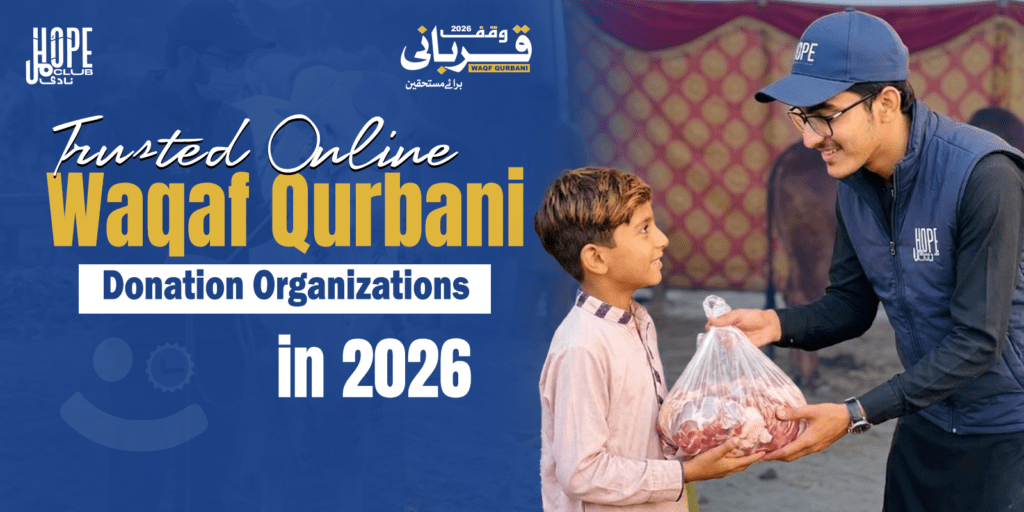
Trusted Waqaf Qurbani Donation Organizations in 2026
As Waqaf Qurbani becomes more popular, donors now have access to dozens of platforms offering Qurbani services. While this variety may seem helpful, it often creates a new problem: Which platform can actually be trusted? Many donors struggle with: Since Qurbani is an act of worship with specific conditions, these concerns are valid. It is not just about donating money; it is about ensuring the sacrifice is carried out properly, within the correct time, and distributed to the right people. The challenge is that most platforms appear similar on the surface. However, behind the scenes, their systems can differ significantly in terms of transparency, control, and execution. By comparing trusted Qurbani donation foundations based on clear criteria, you can choose a platform that aligns with your expectations for safety, verification, and proper execution. Donate Now Compare Waqaf Qurbani Platforms Choosing a Waqaf Qurbani platform should not be based on price or popularity alone. Since you are trusting an organization to perform a religious obligation on your behalf, it is important to evaluate how each platform operates. A structured comparison helps remove confusion and allows you to make a decision based on clarity rather than assumption. Key Factors to Evaluate Below are the most important criteria to consider when comparing Qurbani donation platforms: 1. Price Price is often the first thing donors notice. However, it should not be the only deciding factor. Lower prices may sometimes raise questions about: A balanced approach is better than simply choosing the cheapest option. 2. Regions Covered Some platforms operate locally, while others distribute Qurbani globally. Wider coverage can help reach more communities, but it may also reduce visibility at the individual donor level. 3. Transparency Transparency refers to how clearly a platform explains its process. A transparent organization will provide: 4. Tracking and Updates Donors often want confirmation that their Qurbani has been completed. Platforms with tracking or updates provide: Limited tracking may leave donors unsure. 5. Execution Model This is the most important factor. It refers to how the Qurbani is actually carried out behind the scenes. Some platforms rely on: Others use: The execution model determines reliability. Why These Criteria Matter By evaluating platforms using these factors, you move from guesswork to informed decision-making. Instead of relying on branding or assumptions, you can compare real operational differences. Platform Comparison: Side-by-Side Overview To make your decision easier, here is a structured comparison of popular Qurbani donation platforms based on the key criteria discussed earlier. Platform Transparency Tracking Scale Control Hope Club High Yes Medium High Waqf.org Medium Limited Medium Medium Alkhidmat Medium Limited High Low Islamic Relief Medium Limited Global Low Quba Medium Limited Small Low How to Read This Table Each column represents a key factor that affects your Qurbani experience: Key Observations Where Hope Club Stands From this comparison, Hope Club stands out due to its combination of: While it may not operate at the largest global scale, its strength lies in control and clarity, which are essential for fulfilling Qurbani correctly. Strengths: Approach: Hope Club focuses on organizing Qurbani through a defined system rather than treating it as a general donation. This helps ensure that the sacrifice is carried out properly and according to plan. Donate Now Waqf.org Strengths: Limitations: Approach: Focuses more on structured giving but provides less direct insight into how each Qurbani is handled. Alkhidmat Foundation Strengths: Limitations: Approach: Strong in reach but less focused on individual process clarity. Islamic Relief Strengths: Limitations: Approach: Designed for global impact, but individual donor visibility may be limited. Quba Foundation Strengths: Limitations: Approach: Provides standard Qurbani services but with less detailed process explanation. Why Most Platforms Lack Visibility Many Qurbani donation platforms operate at large scale, which allows them to serve a wide number of communities. While this approach is valuable, it also introduces a common limitation: reduced visibility for individual donors. Understanding this issue helps explain why some platforms provide less clarity about the process. Bulk Processing Systems Large organizations often manage thousands of Qurbani donations at once. To handle this volume efficiently, they rely on bulk processing models. In this system: While efficient, this reduces personal visibility. Mass Distribution Approach When Qurbani is distributed across many regions, the focus shifts toward reaching as many people as possible. This broad distribution is beneficial, but it can limit detailed feedback for each donor. As a result: Limited Donor-Level Updates Because of the scale involved, many platforms do not provide detailed updates for each Qurbani. Donors may receive general confirmation, but not specific insight into the execution process. The Trade-Off Between Scale and Control There is often a trade-off between scale and control: Understanding this difference helps donors choose what matters most to them. Why This Matters for Your Qurbani Qurbani is not just about distribution, it is about correct execution. Without visibility, donors may not feel fully assured that their obligation has been fulfilled properly. This is why many people now prefer structured platforms that focus on clarity and controlled execution. Why Hope Club Is the #1 Choice for Waqaf Qurbani Online After comparing platforms and understanding the limitations of large-scale systems, the difference becomes clear. The most reliable Qurbani experience comes from platforms that focus on structure, control, and transparency, rather than just scale. This is where Hope Club stands out. A Structured Qurbani System Hope Club does not treat Qurbani as a simple donation process. Instead, it operates through a defined system that organizes each step from selection to execution and distribution. This structured approach helps ensure: Clarity at each stage reduces uncertainty. Better Control Over Execution Unlike bulk processing models, Hope Club emphasizes control. This means the process is not lost within large-scale operations, but handled in a more organized and monitored way. Greater control leads to: Designed for Donor Confidence The goal of a structured system is not just efficiency; it is trust. When donors understand how their Qurbani is handled, they can fulfill their obligation with peace of mind. Hope Club focuses on ensuring