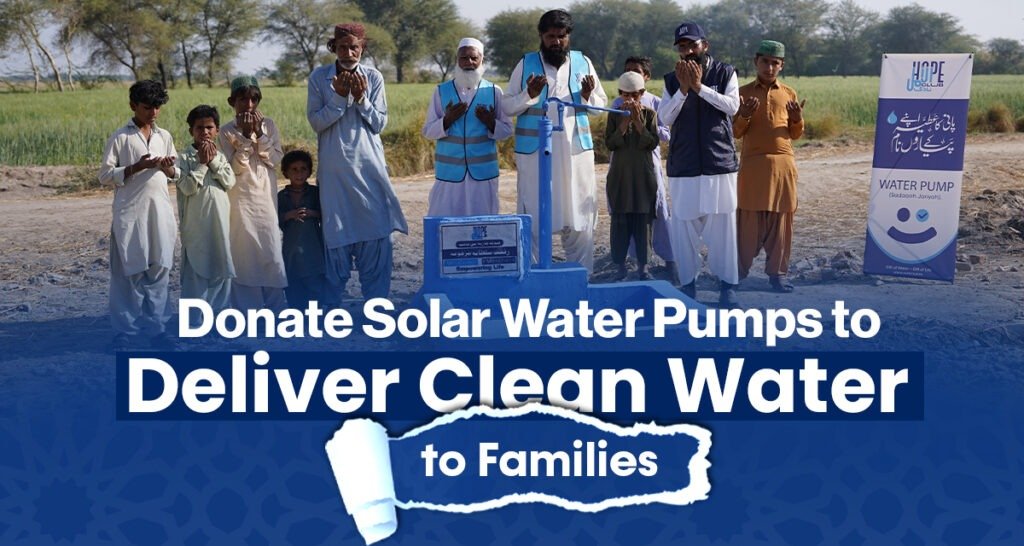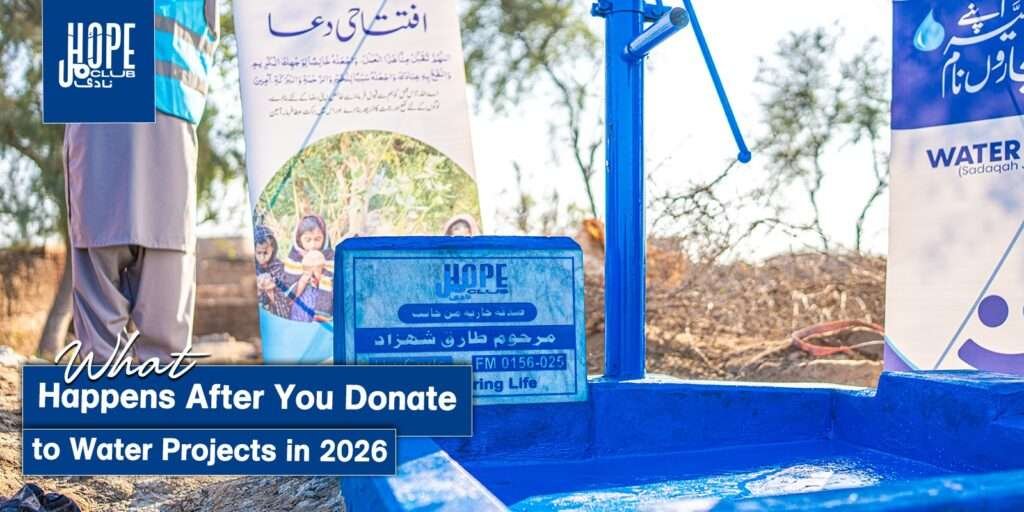
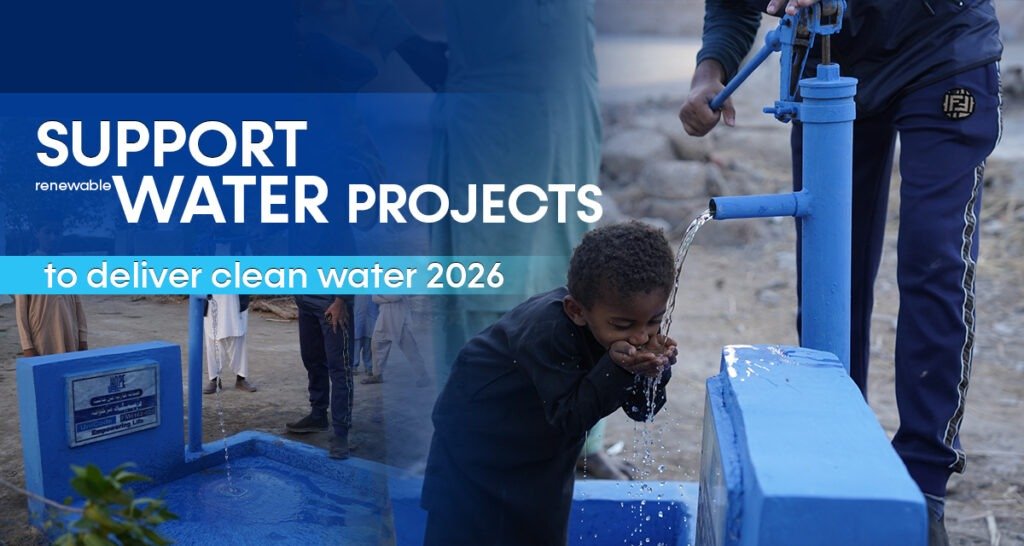
Support renewable water projects to deliver clean water 2026
Across rural Pakistan, temporary water relief often solves today’s shortage but fails to secure tomorrow’s supply. The need for renewable water projects in Pakistan has never been more urgent. While water tank deliveries and short-term aid offer immediate help, they rarely build lasting stability. In provinces like South Punjab, Thar, and interior Sindh, access to safe water determines health, education, and economic survival. A true long-term water charity must move beyond emergency relief and invest in systems that continue functioning year after year. Solar-powered water systems are among the most reliable pathways to the clean, sustainable water Pakistan urgently needs. Donate Now Why Pakistan Needs Long-Term Water Infrastructure The water crisis Pakistan faces is not temporary. It is structural. More than 21 million people lack access to safe drinking water. In rural communities across South Punjab and interior Sindh, access to groundwater remains inconsistent and often contaminated. The ongoing lack of clean water in Pakistan disproportionately affects villages where infrastructure investment has historically been limited. The rural water shortage Pakistan faces creates layered consequences: Short-term tanker relief or bottled distribution addresses immediate thirst. But once the supply ends, the crisis returns. Renewable Water Projects: The Future of Sustainable Charity When we talk about renewable water projects in Pakistan, we are talking about systems designed to operate for decades, not days. Renewable infrastructure uses sustainable energy sources, primarily solar power, to lift and distribute groundwater without recurring dependence on fuel. Unlike traditional aid models that require repeated financial input, renewable systems create long-term independence. Once installed, they operate using sunlight, one of Pakistan’s most abundant natural resources. This is what makes renewable systems the foundation of a truly sustainable water charity in Pakistan. What Makes a Water Project “Renewable”? A renewable clean water project typically includes: The system converts sunlight into electrical energy, powering pumps that draw groundwater from significant depths. Because sunlight is freely available, operational costs remain low compared to diesel-powered alternatives. This model creates water independence rather than water dependency. Environmental and Economic Benefits A renewable water system delivers both ecological and financial advantages. Why Renewable Projects Make Sense From a donor perspective, the return on investment is significant. If a solar-powered system serves 300 people daily for 12 years: 300 × 365 × 12 = 1,314,000 safe water access instances That is over 1.3 million moments of safe hydration from a single installation. Compared to repeated short-term aid distributions, renewable infrastructure multiplies impact without multiplying cost. This is the shift from temporary charity to structural change. Renewable water systems are not emergency responses. They are community water infrastructure built to outlast seasonal shortages and economic fluctuations. Solar Water Pumps: Decades of Clean Water Access Among all renewable water projects in Pakistan, solar-powered systems stand out as the most practical and scalable solution for rural communities. A properly installed solar water pump system in Pakistan can serve hundreds of people daily while operating reliably for more than a decade. This is not temporary relief. It is long-term water security. How Solar Water Pumps Work A solar water system operates through a simple but powerful mechanism: Because the system relies on renewable solar energy, it does not require fuel purchases or grid electricity. This makes it highly suitable for remote villages in South Punjab, Thar, and interior Sindh, where power infrastructure may be unreliable or absent. Community Scale Impact Unlike small manual pumps that serve limited households, a single solar installation can provide: This level of scale transforms water from a daily struggle into a shared community resource. Over a 10–15-year lifespan, the cumulative benefit becomes extraordinary. If a system serves 300 individuals daily for 12 years: 300 × 365 × 12 = 1,314,000 safe water access instances That means over one million instances of hydration, cooking, cleaning, and hygiene are supported by a single installation. High-Impact Sadaqah Jariyah For those motivated by faith, the opportunity to donate a solar water pump in Pakistan represents a powerful form of long-term sadaqah jariyah. As long as water flows, the benefit continues. Every sip taken, every meal prepared, and every act of cleanliness performed contributes to ongoing reward. Because the system has been functioning for years, the impact does not stop after installation. It compounds daily. This is why solar water infrastructure is often considered one of the most meaningful forms of long-term sadaqah jariyah; the benefit reaches hundreds and continues for decades. Supporting a solar-powered water system means building something that will outlast seasonal aid cycles and serve future generations. Donate Now Cost vs Impact: Why Renewable Projects Deliver Better Value When evaluating the cost of the water project in Pakistan, it is essential to compare short-term relief with long-term infrastructure. Traditional water aid often requires repeated funding. Tankers must return. Bottles must be repurchased. Emergency distribution must be organised repeatedly. Renewable solar systems, by contrast, involve a higher upfront investment but dramatically lower lifetime cost. Comparison Overview Factor Traditional Water Aid Solar Water Project Duration Days or weeks 10–15+ years People Served Limited 200–500+ Daily Operating Cost Recurring Minimal Energy Source Fuel/Grid Solar (renewable) Long-Term Stability Temporary Sustainable Impact Math Perspective If a solar water pump serves 300 people daily for 12 years: 300 × 365 × 12 = 1,314,000 safe water access instances From a cost-efficiency standpoint, the cost per beneficiary of a solar water pump in Pakistan becomes significantly lower over time than repeated emergency aid. Renewable infrastructure delivers better humanitarian ROI because it spreads benefits across years, not days. How Hope Club Ensures Transparent Project Delivery Choosing a trusted water charity in Pakistan requires proof of process, not marketing language. Hope Club Pakistan follows a proper delivery model for renewable water projects. Project Implementation Process Every renewable installation includes: Donors typically receive: This system ensures that renewable clean water projects are not only installed, but verified and traceable. How to Sponsor a Renewable Water Project Today If you are searching for how to donate a solar water pump to Pakistan, the process is straightforward and